

INDEX:
This is what you can expect from this article:
In this blog-post, you will learn how quickly you can learn the basic techniques of fly tying as a beginner. I will show you different methods so that you can decide whether it is better for you to take a fly-tying course or to learn on your own using online tutorials. I will mention the advantages of each, but both are basically suitable. I also have some specific tips for you in this blog article about tools and materials for fly tying.
ANYONE CAN LEARN TO TIE FLIES
I have been an enthusiastic fly fisherman for over three decades and have been tying my own flies for just as long, because at home, fly fishing and fly tying have always been inextricably linked. There was a very simple reason for this: at that time, artificial flies were not available in the local fishing shop and there was simply no money for expensive and elaborate orders. Therefore, if you wanted to fish with a fly, you either had to rely on a friend who was a fly fisherman to give you a discarded pattern from time to time, or you had to tie your own flies. The approach was correspondingly pragmatic: simple sewing thread from mother's sewing box and some feathers from the chickens in the backyard were quickly procured, and tying was still done with the hook in hand, because of course I didn't have a tying vise at the beginning either. I learned from my grandfather how to make catchy fly patterns from comparatively simple materials and with few accessories. He not only showed me how to use a thread to fix feathers and hair on a fishing hook to create an insect imitation that really catches fish, but also how to successful chase trout and grayling with those artificial flies.
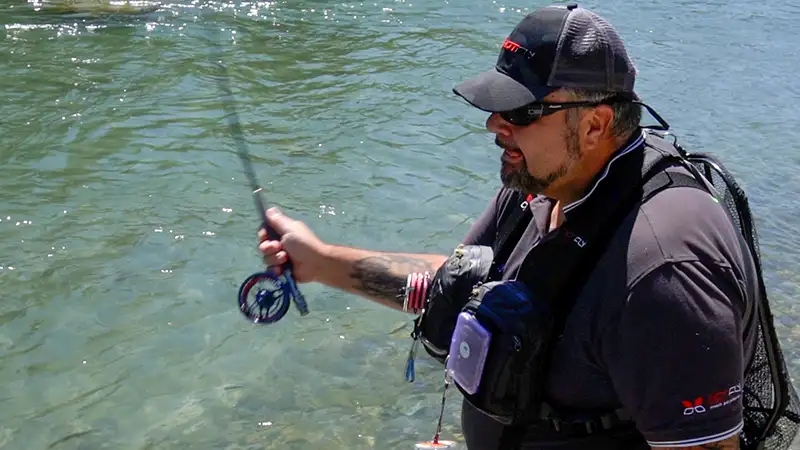
I have been fishing with self-tied flies from the very beginning of my fly fishing career
Even later, when I started earning my own money, it would have never occurred to me to buy my flies. I had come to enjoy fly-tying so much that I would never have considered buying my flies, even when I started earning my own money. Over time, I also developed a knack for it. Today, I tie flies professionally and full-time. I also regularly teach fly-tying courses for beginners and advanced fly tiers, and I can confidently say that every fly fisherman can tie their own flies and use them to catch beautiful fish with them.
1. THERE ARE MANY GOOD REASONS TO TIE YOUR OWN FLIES
I should actually be glad that so many fly fishers are passionate about their hobby, but prefer to buy their flies instead of tying them themselves, because after all, I make my living from the fact that so many rely on my Made in Italy flies from the Sayot fly-tying manufacture. Nevertheless, I cannot help but take up the cudgels for fly tying and emphasise the many beautiful sides to it. Fooling the fish with self-tied flies makes the experience of fly fishing simply perfect. Of course, I often hear that fly tying is time-consuming and that many people prefer to invest their limited free time in fly fishing rather than in tying flies. It would never occur to me to sit at the tying vise when the trout are rising and taking flies from the surface like crazy. During the year, however, there is always time to refill the empty fly boxes myself. Instead of lounging in front of the TV or on my mobile phone in the evening, I'd rather tie a few more flies. There is something calming and relaxing about spending time at the fly-tying vise, at least for me. When a hook and a few fly-tying materials are transformed into a beautiful fly, it is very rewarding and fills me with a deep sense of satisfaction.
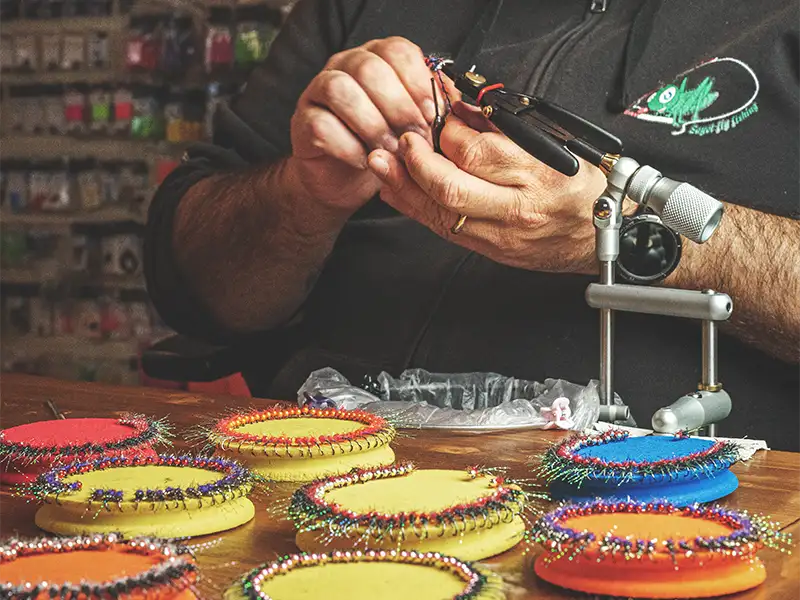
My "desk" at the most beautiful work I can think of
But fly tying is also perfectly suited to bridge the closed season. When I'm sitting at the tying vise, I'm already back at the water in my thoughts, imagining how the fish rise to my flies, and when I've refilled even the last fly box, I know that it won't be long before the season starts again.
2. TYING FLIES IS EASIER THAN YOU THINK!
Sometimes I have to smile a little when lack of fine motor skills is used as an excuse for not trying fly tying. If you saw me on the street, you might not think at first glance that I do delicate precision work all day with my large and strong hands. But fly tying does not necessarily require slender hands and fine, agile fingers. It has more to do with an understanding of the living environment in and around the water that we want to recreate, as well as the creativity to do this in the best possible way using the available tying materials, tools and your own skills. There is no single correct way to tie an artificial fly. If I don't get on well with a particular material or a special tying technique, in many cases there are all sorts of alternatives open to me to at least achieve a similarly good result.
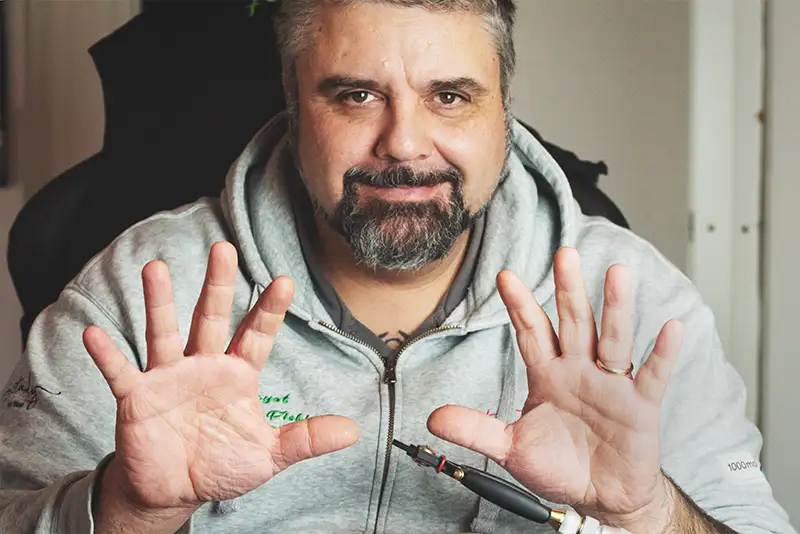

With a little practice, delicate and tiny dry flies can also be tied with such hands without major problems
The best example of this was provided to me years ago by a participant in one of my tying courses. Due to an accident, the ability to move one hand was limited, so that he could no longer exert pressure when gripping with his fingers. Nevertheless, he was highly motivated to take part in my course and learn how to tie flies. Bundling and preparing materials, as well as all work that required both hands at the same time, was naturally difficult for this participant. Therefore, I modified some fly patterns for him so that they could be tied with substitute materials. For example, we did without dubbing when forming the fly body and used a suitable chenille instead. The result was quite appealing, and the flies, of course, were catchy too. But the real clue was that this participant was able to tie his own flies. It was very impressive to see how much he did not doubt for a second that he would learn to tie flies and when he sent me the photos of the fish he had caught with his own flies, I was very happy about it.
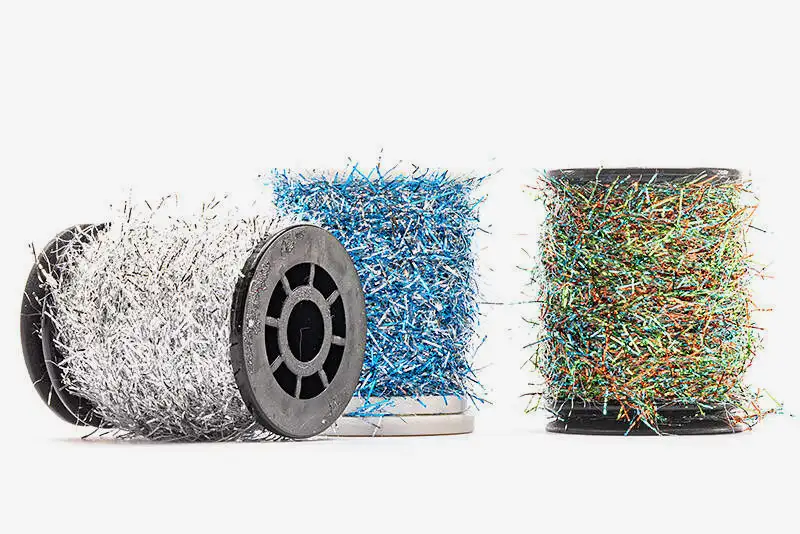
Special tying threads or fine chenille such as this Brass Wire can replace dubbing in many cases
3. HOW DO I TIE MY FIRST FLY MYSELF?
3.1. THE FLY-TYING COURSE
The best and easiest way to get started in the wonderful world of fly tying is still to attend a course. Having taught fly-tying courses for many years, I have seen how well and quickly the vast majority of students develop the basic skills to be able to take home their first own flies after just one or two evenings. The big advantage of courses or fly-tying evenings is definitely the interactive format and the direct exchange with the instructor. Not only will you get every question answered, but the instructor will also show you the correct way to use tools and how to use the different materials. He will share tips and tricks with you that you can apply to your next self-tied fly to make it even more efficient, faster, easier or cleaner to tie.
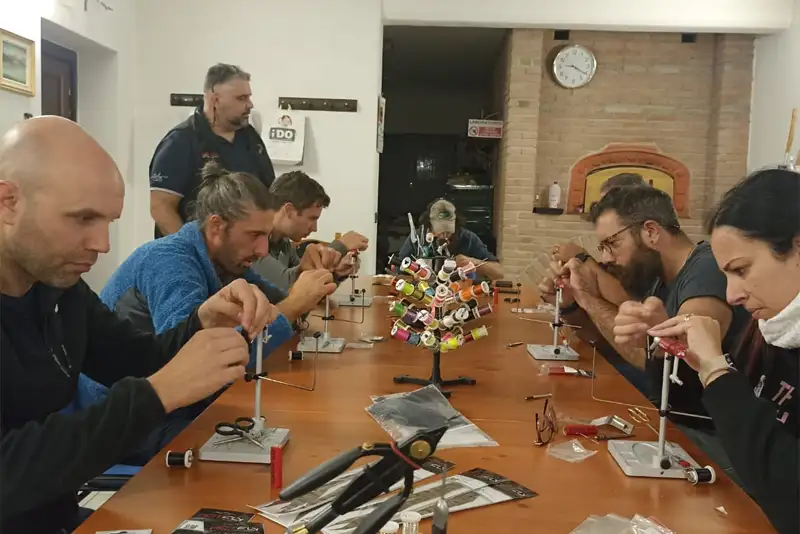
In my humble opinion a fly tying course is still the easiest way to get started with fly tying
He also knows exactly which fly patterns are suitable for you at the very beginning of your fly-tying career, to help you get great results quickly. And he can also advise you on the necessary and useful fly-tying tools and materials so that you are not overwhelmed by choice at the beginning and make expensive mistakes.
Ideally, you should attend a fly-tying course in your area, as this has several advantages. Firstly, you will mainly be tying flies that are actually used in the local waterways. Secondly, you will also meet like-minded people from the area in the group and can exchange ideas with them about fly tying and many other fly-fishing topics beyond the course.
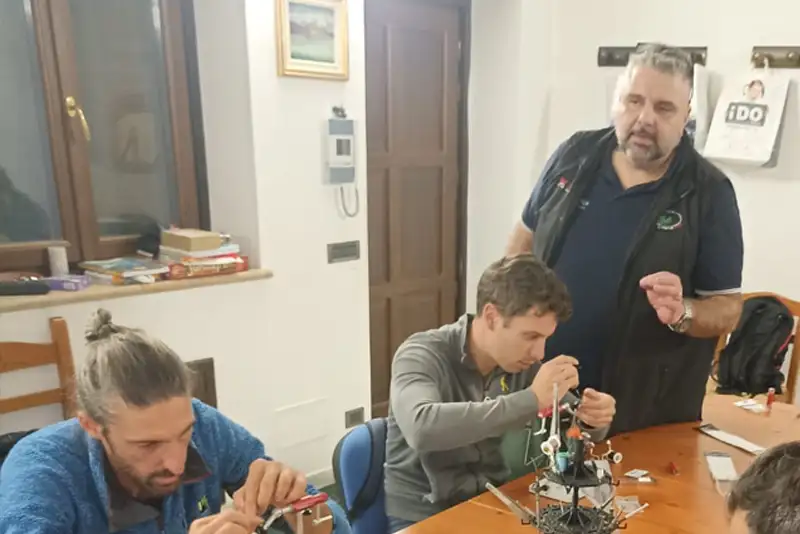
Just ask at the local fishing club or your fishing shop if they themselves hold fly-tying courses or at least know when and where one takes place. Fishing guides also often offer such courses. In many cases, such courses take place during the closed season because it is then easier for course participants and instructors to find time and – as mentioned above – the period until the start of the season can be made as meaningful and enjoyable as possible.
3.2. LEARN TO TIE FLIES WITH YOUTUBE
Of course, fly-tying videos on platforms such as YouTube and co. can also be a great help when you are just starting out. The quality of videos has steadily increased over the years and now there are countless excellently made fly-tying instructions and explanatory videos from professional content creators on the internet. These are suitable for an uncomplicated introduction to fly-tying in several ways, because they are free, always and everywhere available, so you can learn about the topic when it suits you best. Of course, direct interaction or asking questions is more difficult here, but you can view a specific tying step, such as how to start wrapping the tying thread on the hook shank or how to tie a head knot, as often as you like. And if you still can't manage it after the umpteenth time, you can simply find another video that explains it even better.
Even seemingly simple tying steps are not so obvious at first
Of course, with such an extensive range of videos, the downside is the proper selection. Especially as a beginner in fly tying, it is difficult to find those videos that are not only visually and technically well done but also convey the concepts and content of fly tying in a simple, understandable and descriptive way. Because not everything that can be found on the internet is automatically recommendable.
In addition, many fly tiers who post videos online are more concerned with generating likes and interactions than with teaching and explaining basic principles to beginners in a very simple way. Understandably, the fly tyer and content creator also wants to show off his expertise. That is why many videos also show rather elaborate and complex fly patterns that look spectacular and thus generate a corresponding number of clicks and likes. However, they can often be overwhelming for a motivated beginner in fly tying who is looking for good instructions for a simple fly pattern. If it doesn't work right away, and the result at the home fly-tying vise bears no resemblance to the pattern presented in the video, it can unfortunately also have a demotivating effect, which would be a shame.
It is important to know that even with fly tying, no master has yet fallen from the sky and those fly tiers who put their tying videos on the net have been tying flies for a very long time and a great deal. So don't be put off by this or let it spoil your mood when tying flies.
Therefore, I can only recommend that when you start learning how to tie flies with YouTube, you do not immediately start tying a fly pattern, no matter how simple and easy it seems. First, you should learn the basic techniques, such as how to properly clamp the hook, how to lay a basic thread winding, or the different types of end knots. This way you will also learn how to handle the different tools and get a feel for the tying thread. How tightly do you have to wind it so that it securely fixes the tying material on the hook shank? When does the tension become too strong and the tying thread breaks? Which thread thickness is suitable for which tying materials?
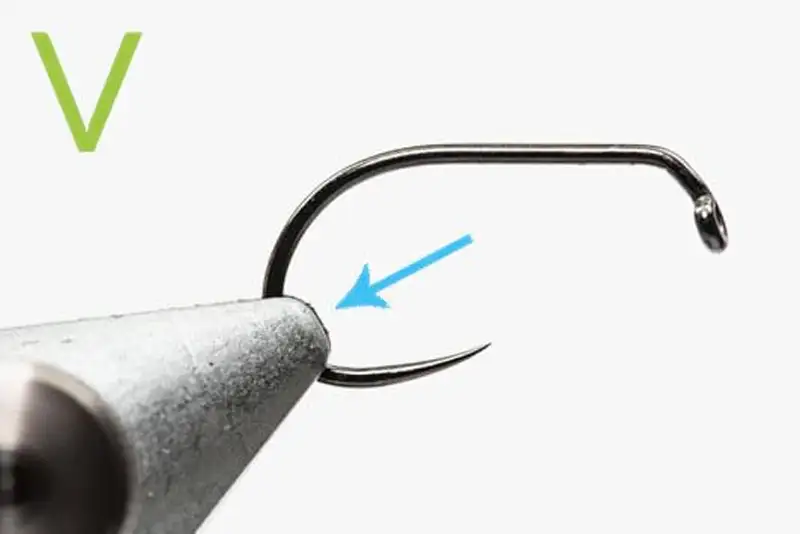
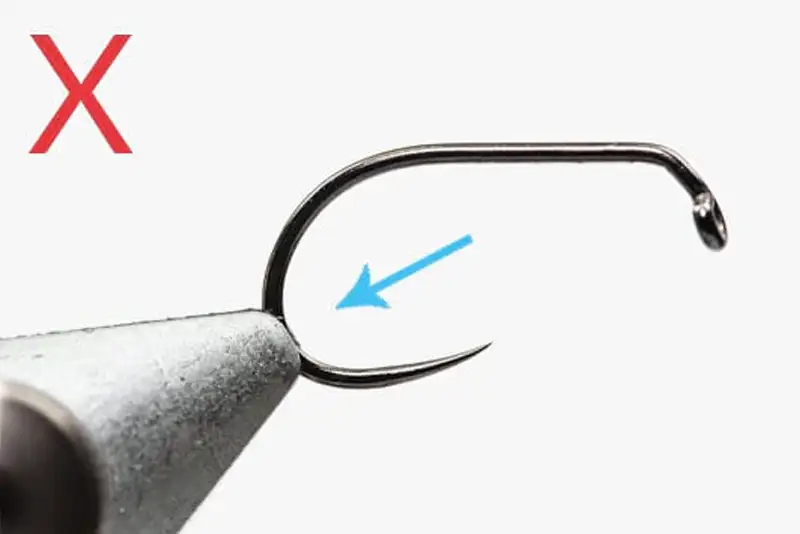
When learning fly tying, it's all about the basics at the beginning - such as the correct clamping of the hook
You should also take a step-by-step approach to familiarising yourself with the different tying materials. Which materials are more suitable for dry flies, and which are better for wet flies, nymphs and streamers? Which ones are best for mimicking bodies, legs or wings? What properties do they have in water? How are they handled and how do they behave when they are tied in? How much or little material is needed to give your imitations the most realistic proportions.
On the YouTube channel of 1000flies, you will find a whole series of informative and appealing fly-tying videos. The individual tying videos are categorised so that you can find the right instructions for your respective tying level (easy, medium, difficult). Don't worry, these flies all catch fish, and even in the ‘easy’ category you will find many appealing patterns that you can easily tie with a little practice very soon. In addition, you will also find all the tying materials and tools used in the video in the description text.
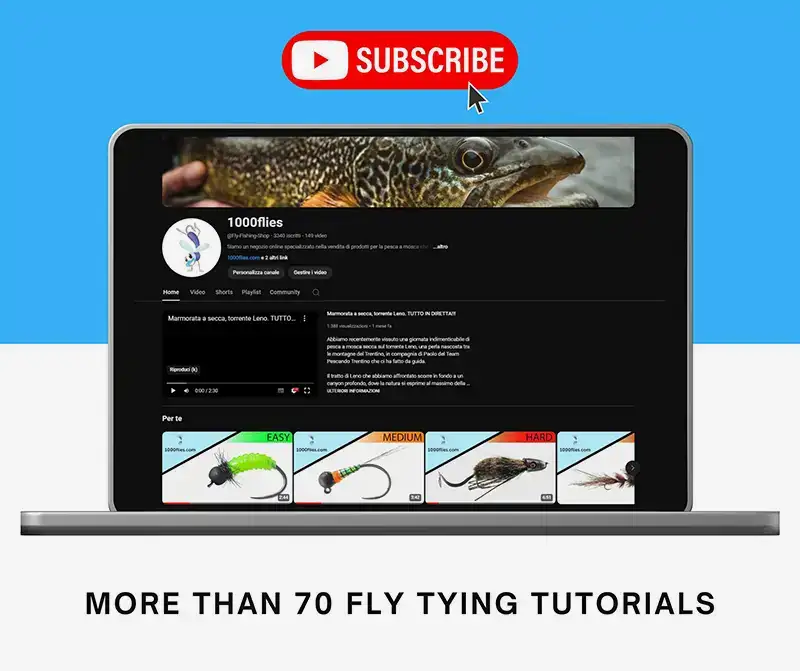
1000Flies also has its own YouTube channel and shows great tying videos there
That's also the keyword that brings us to the next big topic when it comes to learning how to tie flies:
4. WHAT DO I NEED TO START TYING FLIES?
Above all, tying your own flies should be fun, so especially at the beginning you should not make life unnecessarily difficult for yourself and resort to inferior tools and fly-tying materials, even if they are offered at a particularly low price at first glance. Keep in mind: if you buy cheap, you buy twice. Scissors that don't cut, bobbin holders that constantly damage the fly line, a fly-tying vise that wobbles and doesn't hold the hook properly, brittle feathers... all these things are simply annoying when tying flies and robbing you of the fun of it. You certainly don't need luxury equipment when you're just starting out, but decent tying tools and good tying materials will ensure you have a really good time and less frustration at the tying table.
As mentioned above, a fly-tying course is ideal for beginners, because you will get to know different tools and accessories and can try them out. Which type of whip finisher suits me? What are the differences between boobin holders? Do I need a dubbing needle and hackle pliers? You can answer all these questions for yourself at the end of a good fly-tying course. You will see that you don't need so many different tools for tying your first fly patterns.
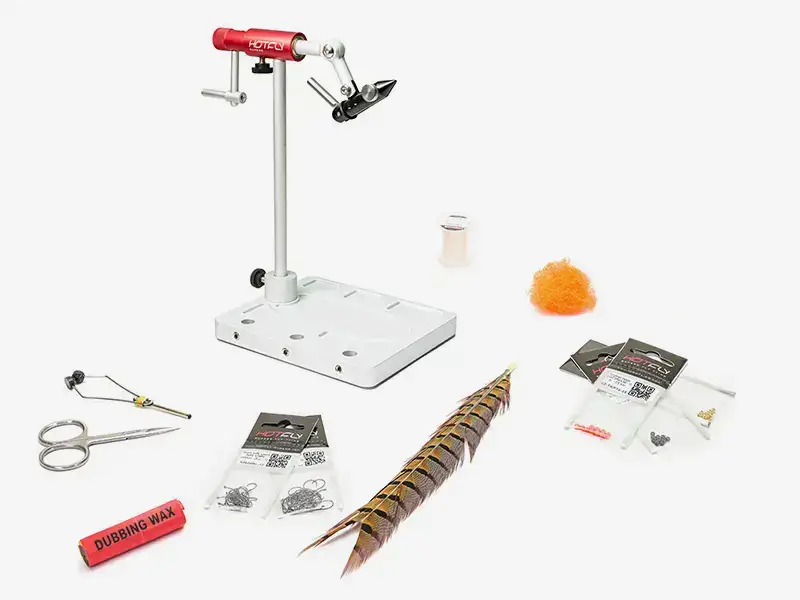
You don't need much to start with for your first fly patterns - but don't skimp on quality
The same applies to fly tying materials. The range of different materials on the market is huge and continues to grow. Especially with modern synthetic materials, new products are constantly being added. It is therefore not surprising that beginners in fly tying often no longer know what they actually need. Most of the time, you are dazzled by exotic tying materials that you rarely need and that gather dust in your box, while you may overlook inconspicuous but very versatile materials that you then don't have at hand. Of course, choosing the right materials also depends on the type of fly you want to tie. If you are primarily fascinated by dry flies and want to tie them yourself, you can confidently avoid buying tungsten beads. On the other hand, you certainly don't need a foam body with high buoyancy if you want to create a nymph on your tying vise that sinks like an anchor.
5. HIGH-QUALITY FLY-TYING KITS
5.1. COMPLETE KITS WITH TYING VISE, TOOLS AND TYING MATERIAL
For all those who do not receive a ‘shopping list’ from the instructor at the end of their fly-tying course, the specially compiled fly-tying kits from 1000flies are simply perfect. These contain only high-quality tools and materials, all of which are also available individually in the online shop. You won't be getting any junk here, and you’re not buying a pig in a poke either. The terms ‘Basic’ and ‘Pro’ used for the individual kits just refer to the scope of the included products. In addition, the products in these fly-tying kits are put together in such a way that they are either particularly suitable for tying dry flies or specifically for tying nymphs. In addition, you can also choose between two different fly-tying vises. With these fly-tying kits, you get the perfect starter pack to begin your fly-tying adventure without the risk of having to do without really useful, practical or important things. On top of that, these fly-tying kits are also cheaper compared to buying all the products individually.
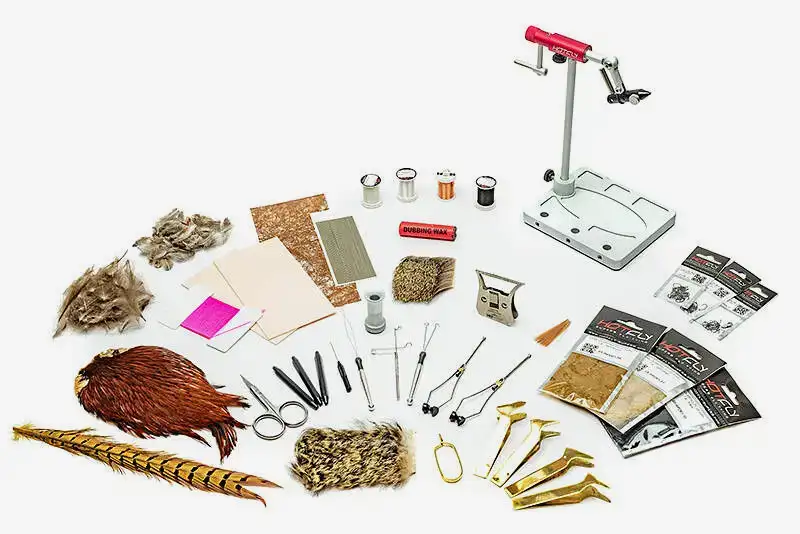
The contents of one of the complete fly tying sets that you can find on 1000Fies
5.2. FLY TYING KITS FOR SPECIFIC FLY PATTERNS (coming soon!)
Do you already have the necessary tying tools and want to tie simple but effective flies? You will soon (!!!) find the right fly-tying kits for this at 1000flies. These kits are put together in such a way that you will find all the necessary tying materials (except for the tying thread) in the appropriate quantity for a specific fly pattern to tie 10 pieces. These are real classics that have proven their universal catchability in many waters and in countless situations. Of course, you will find informative and clear tying instructions for all patterns as well as a video tutorial. This is a clever and affordable way to try out a wide variety of flies without having to buy a huge amount of tying materials for each individual fly pattern. If one of these patterns convinces you at the tying vise and then at the water, you can of course also buy all the tying materials individually in the shop.
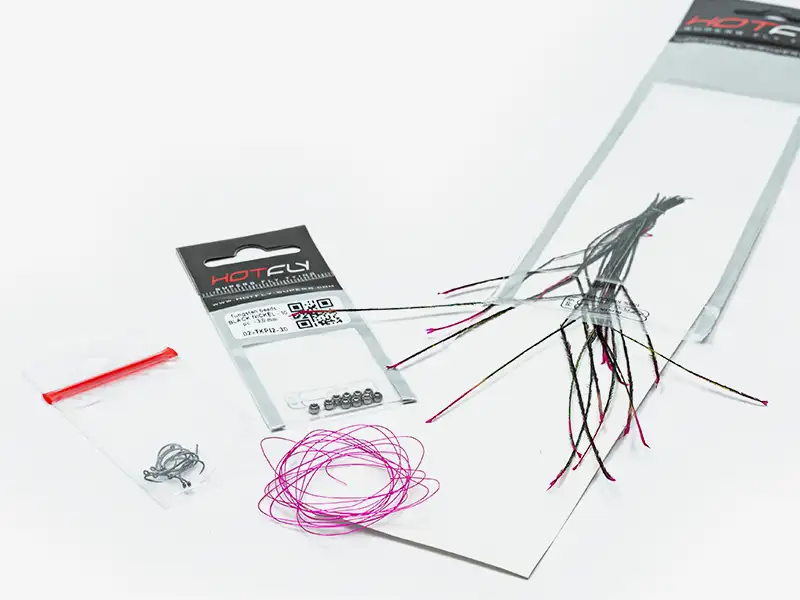
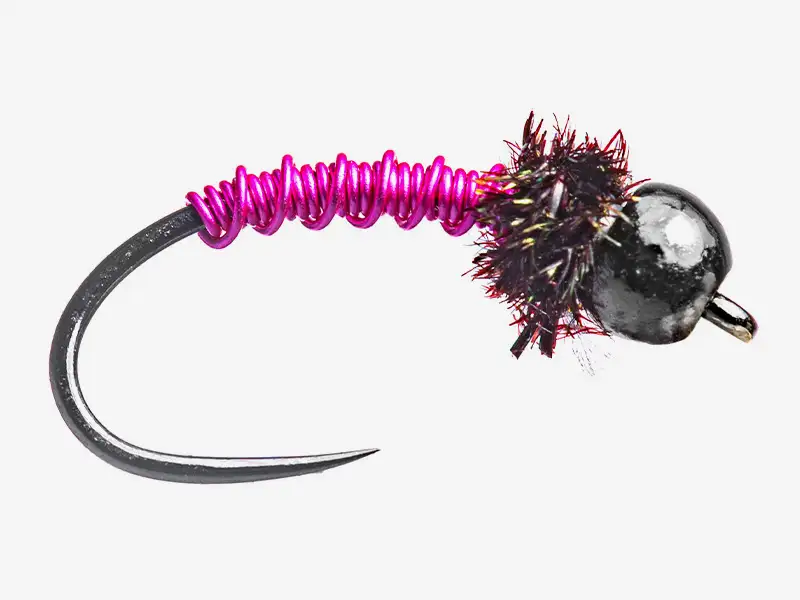
Each fly tying kit holds material to tie 10 flies of this pattern and comes with detailed tying instructions
6. FOR ME, TYING FLIES IS JUST PART OF FLY FISHING
At least for me, it is one of the greatest satisfactions when fly fishing to see that I have caught a fish with a fly that I tied myself. That's why I would recommend that every ambitious fly fisherman should try fly tying. Today there are many possibilities open to you, and it is much easier to get started than it was in my day. Regardless of whether you take a course or use videos to learn the art of fly tying, the important thing is to take the first step. Trust me, just start motivated and curious and your success at the tying vise will be assured. The vast majority of participants in my fly-tying courses go on to tie their own flies, and I see many of them again in the various specialisation courses for advanced tiers. Because one thing is certain when it comes to fly tying: you never stop learning and there is always something new to discover. That, too, is what makes fly tying so special.
There are many good reasons to start fly-tying and, hopefully, I have provided you with sufficient arguments in this article to counter most excuses for not doing it despite your good intentions.
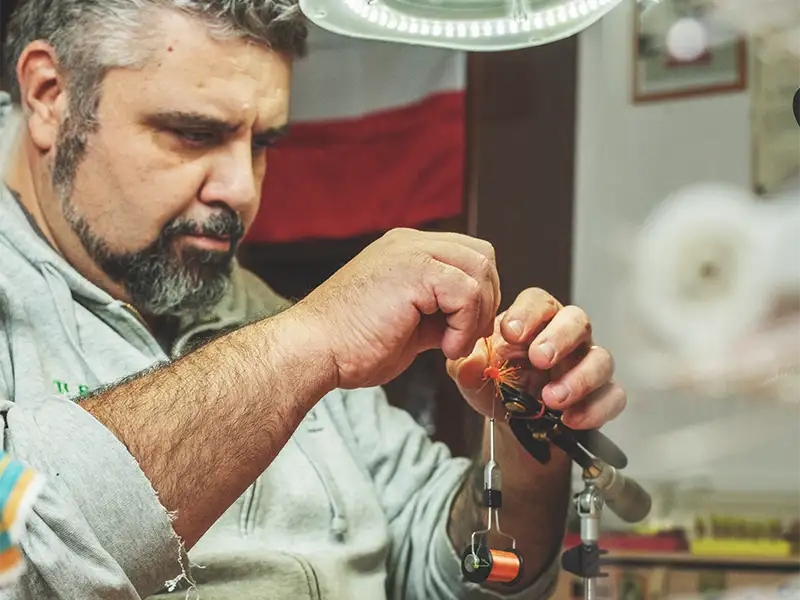
When I'm not out on the water, you'll find me at the fly tying vise - my favourite place
7. FREQUENTLY ASKED QUESTIONS ABOUT FLY TYING FOR BEGINNERS
 )
Yes. With a little patience and the right guidance, most fly anglers can successfully learn fly tying on their own. A good fly-tying course can speed up the learning process, but quality books and video tutorials are excellent alternatives.
Most beginners can master the basic techniques within just a few hours of practice. Every fly you tie improves your dexterity, material handling and overall tying skills.
Simple nymphs, wet flies or straightforward dry flies made from only a few materials are the best starting point. They teach the essential techniques without becoming unnecessarily complicated.
It is usually easier to learn the fundamental tying techniques before moving on to complete fly patterns. Once you've mastered the basics, learning new patterns becomes much faster and more enjoyable.
Tying the same pattern several times in a row is one of the fastest ways to improve. Repetition builds muscle memory, and each fly is usually cleaner and more consistent than the last.
No. Catching fish depends far more on the fly's proportions, silhouette and presentation than on cosmetic perfection. Many simple or imperfect-looking flies are remarkably effective on the water.
A sturdy vise that holds the hook securely is far more important than having lots of advanced features. A well-made entry-level vise is more than capable of tying thousands of excellent flies.
For your first flies, you only need a tying vise, scissors, a bobbin holder, a whip finisher and a dubbing needle. Additional specialist tools can always be added later as your skills and interests develop.
Yes, and many fly tiers did exactly that in the past. However, a quality vise makes almost every step easier and allows you to produce cleaner, more consistent flies.
A whip finisher helps create a neat and secure finishing knot at the head of the fly. Although experienced fly tiers can tie this knot by hand, the tool makes it easier to achieve consistent results.
Thread, dubbing, wire, feathers and various natural or synthetic fibres are among the most commonly used materials. The exact combination always depends on the type of fly you want to tie.
Both have their strengths and complement each other perfectly. Natural materials often provide unmatched movement, while modern synthetics offer excellent durability, consistency and versatility.
Fly-tying materials should be kept clean, dry and protected from direct sunlight. Well-organised storage boxes also make it much easier to find the materials you need while tying.
Most synthetic materials last for many years without any noticeable deterioration. Natural materials should be stored in dry conditions and protected from moths and other insects.
The most common causes are excessive thread tension, sharp edges on your tools or using the wrong thread for the job. Good technique combined with quality tools usually solves the problem.
This usually happens because the material is not positioned correctly or the first securing wraps are too loose. A few well-placed, firm thread wraps normally keep everything securely in place.
A tidy fly head is created by using controlled thread wraps and avoiding unnecessary bulk. In most cases, using less thread produces a cleaner and more durable finish.
Using too much material, tying steps in the wrong order and working with poor-quality tools are among the most frequent beginner mistakes. Starting with simple patterns and focusing on neat workmanship helps avoid most of them.
Initially, tying your own flies usually costs more because you need to invest in tools and materials. However, anglers who tie regularly often save money in the long run while enjoying complete freedom to customise their patterns.
Regular short practice sessions are generally more effective than occasional marathon tying sessions. Even tying just one or two flies each evening steadily improves your skills.
Fish usually react more to a fly's size, silhouette, movement and presentation than to tiny visual details. That is why many classic patterns have remained among the most successful flies for decades.
Balanced proportions, a neat fly head and securely fastened materials are the main signs of quality. Loose thread wraps and bulky bodies often reduce both durability and fishing performance.
Once you start tying flies regularly and feel confident with the basic techniques, higher-quality tools become a worthwhile investment. They improve precision, last longer and make tying more enjoyable.
No. Curiosity, patience and regular practice are far more important than artistic talent. Creativity usually develops naturally as you gain experience with different materials and fly patterns.
 )
This might also interest you:

Fly tying – Streamers
Discover with us some tips and tricks on how to tie streamers, both for trout and pike. These flies are extremely effective because they trigger the fish’s predatory instinct, often provoking violent and adrenaline-filled strikes. If you want to catch the fish of your dreams, learning how to tie the right streamers is essential!

Tying Streamers for Pike
In this article, we’ll show you how to tie two highly effective streamers for pike fly fishing. Both are articulated patterns, and we’ll guide you through tying each one step by step.

Franco Cottarelli – The Story of a Craftsman
Franco Cottarelli is a name many fly fishers know well, closely associated with fly tying vises and inventions used by fly tyers around the world. But there is much more behind that name than a brand. It is the story of a craftsman, an inventor and a man who has spent a lifetime turning ideas and inspiration into something tangible. This is his story.
Fly tying – Streamers
Discover with us some tips and tricks on how to tie streamers, both for trout and pike. These flies are extremely effective because they trigger the fish’s predatory instinct, often provoking violent and adrenaline-filled strikes. If you want to catch the fish of your dreams, learning how to tie the right streamers is essential!
Tying Streamers for Pike
In this article, we’ll show you how to tie two highly effective streamers for pike fly fishing. Both are articulated patterns, and we’ll guide you through tying each one step by step.
Franco Cottarelli – The Story of a Craftsman
Franco Cottarelli is a name many fly fishers know well, closely associated with fly tying vises and inventions used by fly tyers around the world. But there is much more behind that name than a brand. It is the story of a craftsman, an inventor and a man who has spent a lifetime turning ideas and inspiration into something tangible. This is his story.

Fly tying – Nymph
In this article, we’ll discuss the general characteristics of a nymph and explore why it is so effective. Additionally, through detailed videos and photos, we’ll learn how to tie some simple yet highly effective fishing dressings.

Fly Tying – March Brown
The March Brown is much more than just an artificial fly – it's a legend. With deep roots in the history of fly fishing, this pattern has endured through the centuries thanks to its effectiveness and versatility. Used since the Middle Ages, it has adapted to the needs of modern anglers without ever losing its identity.

Fly tying – carp fly
Carp fly fishing challenges the angler’s skill, patience, and attention to detail. Though commonly targeted with bait, carp are also a fascinating and selective species for fly fishing, requiring precise fly presentation and water behavior.

Fly tying – Perdigon
In this article, we’ll explore how to tie a Perdigon fly. You’ll find some interesting facts about the origin of this dressing, discover its advantages and uses, and follow a step-by-step guide—with photos and videos—to tying this highly effective pattern.

Fly Tying - Caddisfly
In this article we will see how to tie a Caddisfly throughout all its growth stages, from the larva with its "case" (Peeping Caddis), to the Pupa, and finally to its complete metamorphosis into the adult Sedge. You'll find a detailed description of the insect's various life stages, accompanied by detailed photos and videos explaining how to tie each pattern effectively.

How to tie a dry fly
The article describes dry flies in fly fishing, illustrating materials, characteristics, and tips for tying them effectively. It offers useful insights both for beginners and for those looking to refine their skills.

FLY TYING: parachute fly
In this fly tying tutorial for parachute flies you will find a video of the fly-tying process, step-by-step photographs, a list of materials and tools used, and a series of parachute flies ready for fishing. What are you waiting for, come and have a look!


