

INDEX:
WHAT IS A DRY FLY
The dry fly is an artificial imitation designed to float on the surface of the water, simulating an emerging insect, one that is laying eggs, or simply drifting. It can imitate mayflies, caddisflies, stoneflies, as well as terrestrial insects like ants or beetles that have accidentally fallen into the water. Its purpose is to provoke a surface strike, one of the most exciting things to witness.
CHARACTERISTICS OF A GOOD DRY FLY
To be effective, a dry fly must meet some fundamental requirements:
- Buoyancy: it must remain afloat for a long time, even in the presence of current, foam, or small turbulence.
- Visibility: it must be visible both to the fish (from below) and to the angler (from above), especially in changing light conditions.
- Realism and lightness: the profile must be convincing, but the weight must be minimal to avoid premature sinking.
MOST COMMONLY USED TYING MATERIALS
To create an effective dry fly, choosing the right materials is essential: they must be lightweight, water-repellent, and capable of keeping the fly afloat on the water’s surface for extended periods.
One of the most popular materials is CDC (Cul de Canard), valued for its natural buoyancy, fiber mobility, and its ability to stay afloat even in challenging conditions. Other commonly used feathers include those from a rooster neck, ideal for creating stiff hackles that hold the fly in position, as well as hen or partridge feathers.
For the bodies, dubbing is often used, either natural (like muskrat or beaver) or synthetic (sometimes enhanced with UV fibers for better visibility). Alternatively, stripped peacock quills allow for the creation of highly realistic segmented bodies.
For wing construction, lightweight and buoyant materials are used, such as antron yarn or CDC, often arranged to also provide good visual contrast for the angler. Finally, for the tail, stiff hackle fibers (such as Coq de Leon) or synthetic materials are preferred, which help maintain the fly’s stability while drifting.
Foam is also used in dry fly tying, especially when aiming to maximize buoyancy. It is a closed-cell synthetic material, lightweight and waterproof, perfect for creating bulky, visible, and durable bodies, particularly suited for terrestrial imitations or attractor flies. When used sparingly, it can also blend into more realistic patterns.
HOW TO TIE A CLASSIC DRY FLY
TYING MATERIALS
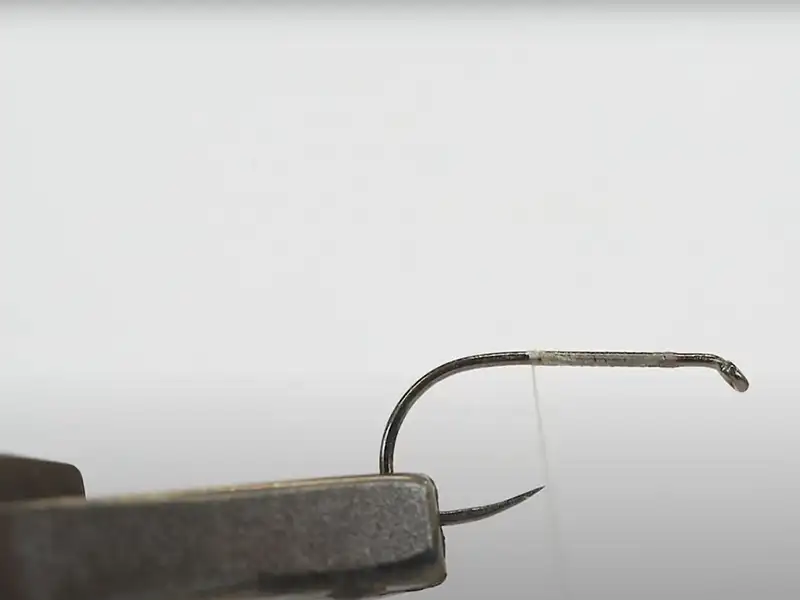
Attach the tying thread to the hook
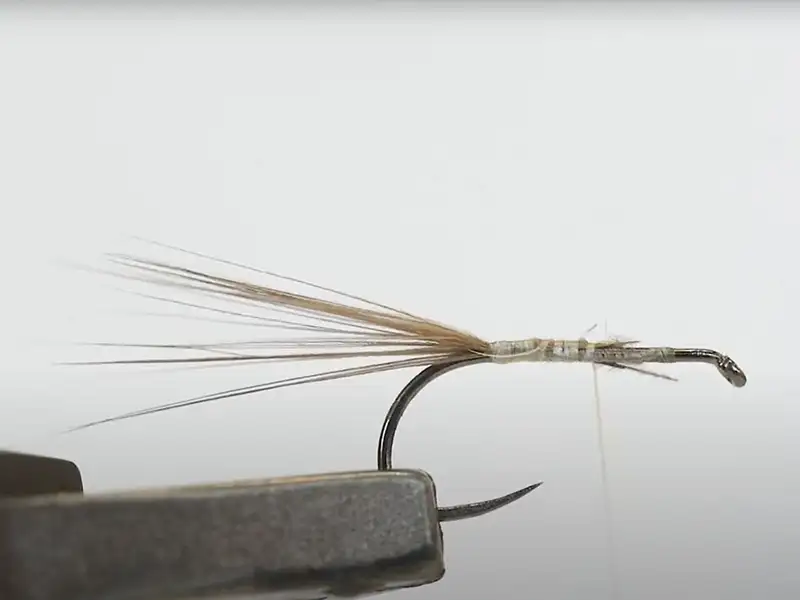
Attach the tail
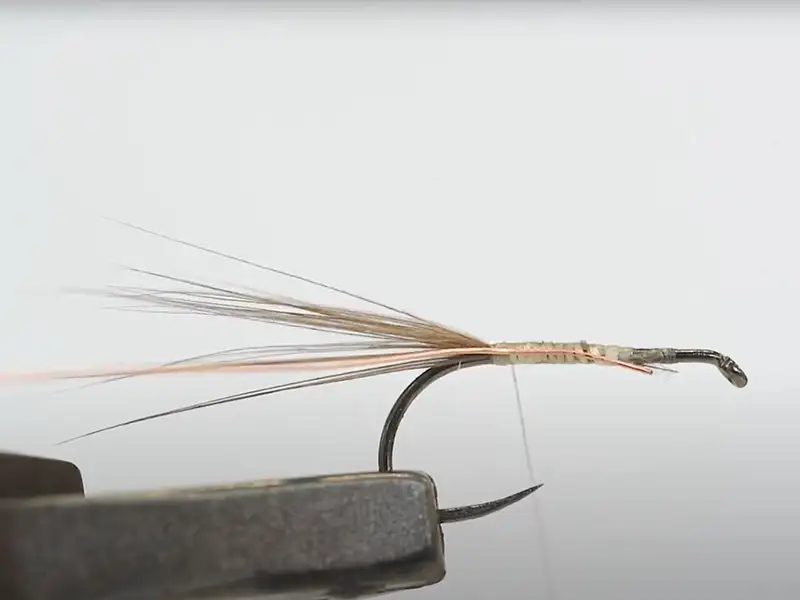
Attach the copper wire
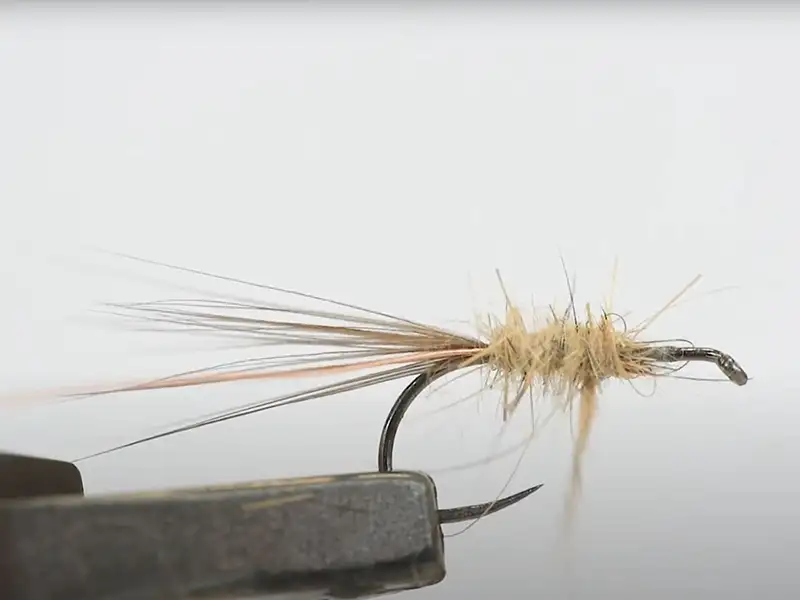
Form the body using dubbing
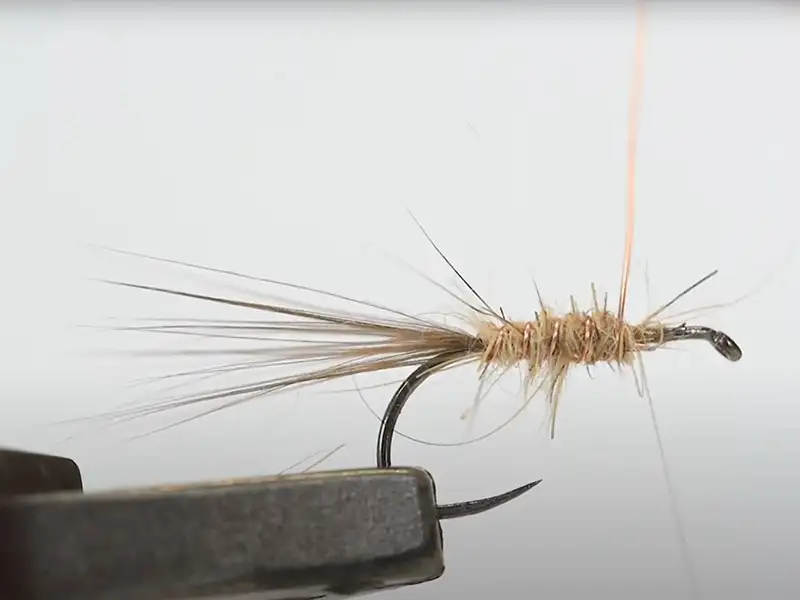
Wrap the copper wire
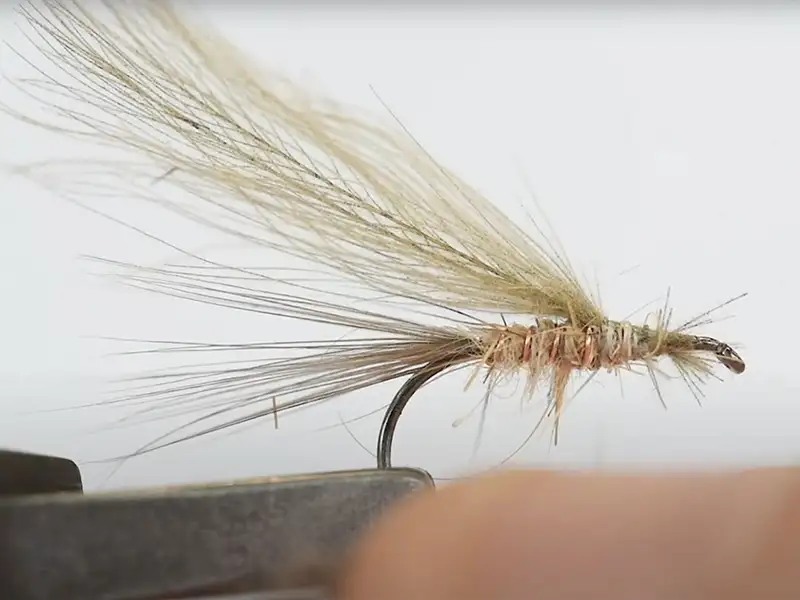
Attach a sufficiently large CDC feather
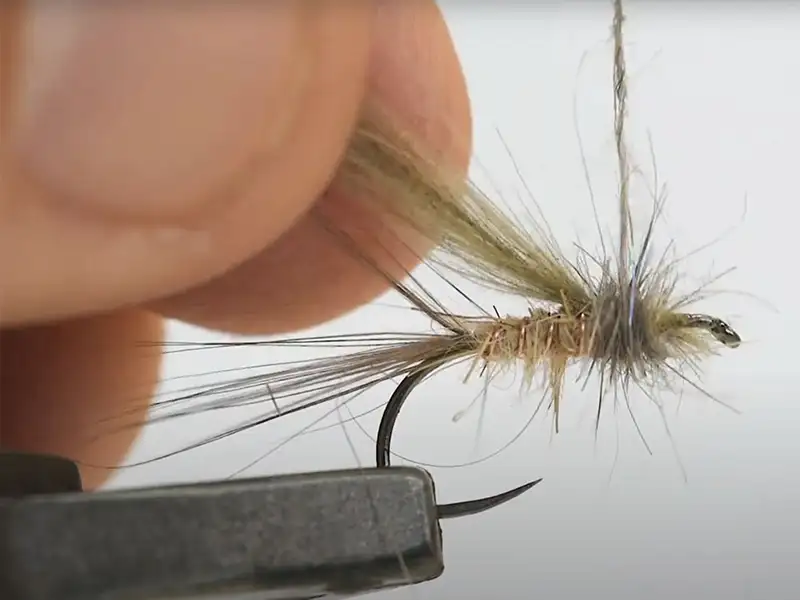
Form the thorax with dubbing
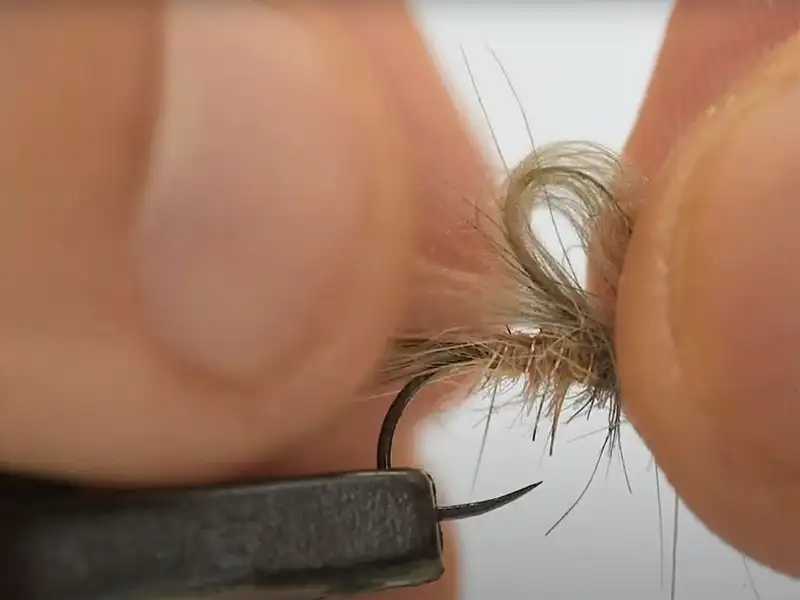
Fold the CDC forward into a loop and secure it again
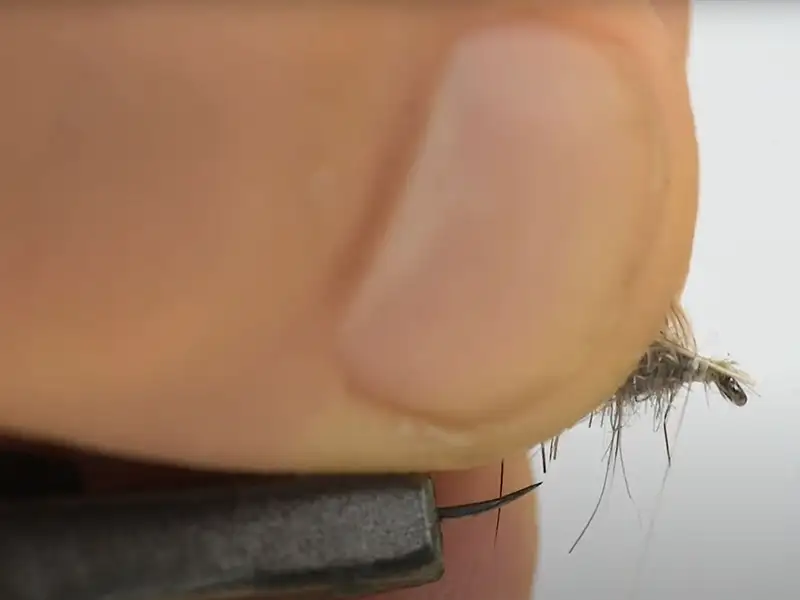
Attach a partridge feather
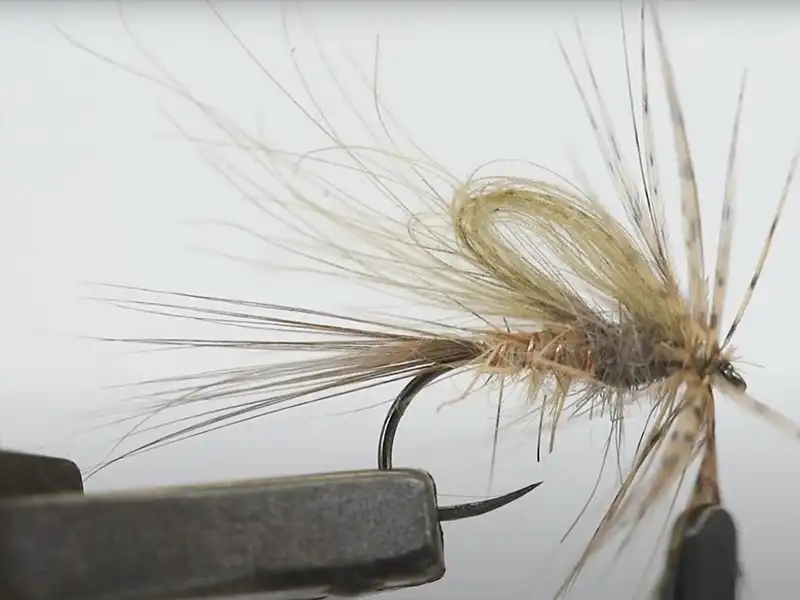
Wrap the partridge feather
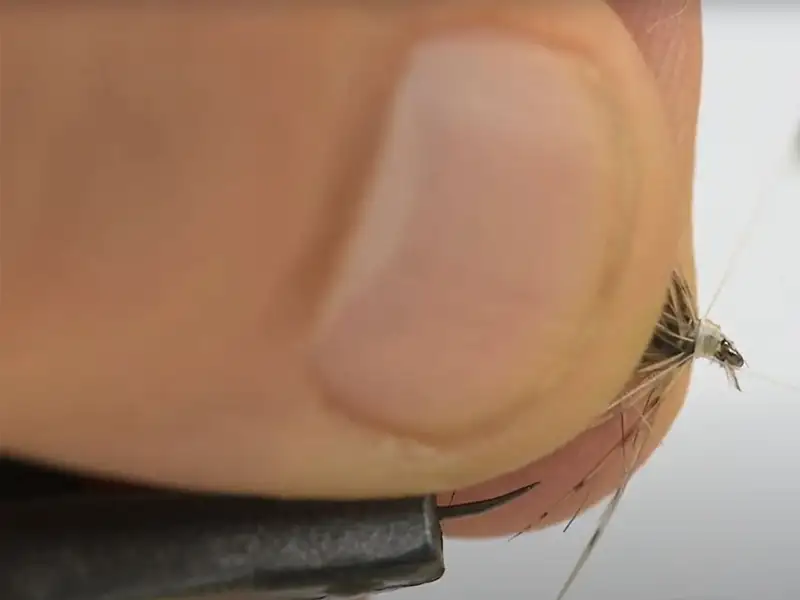
Make a few wraps with the tying thread
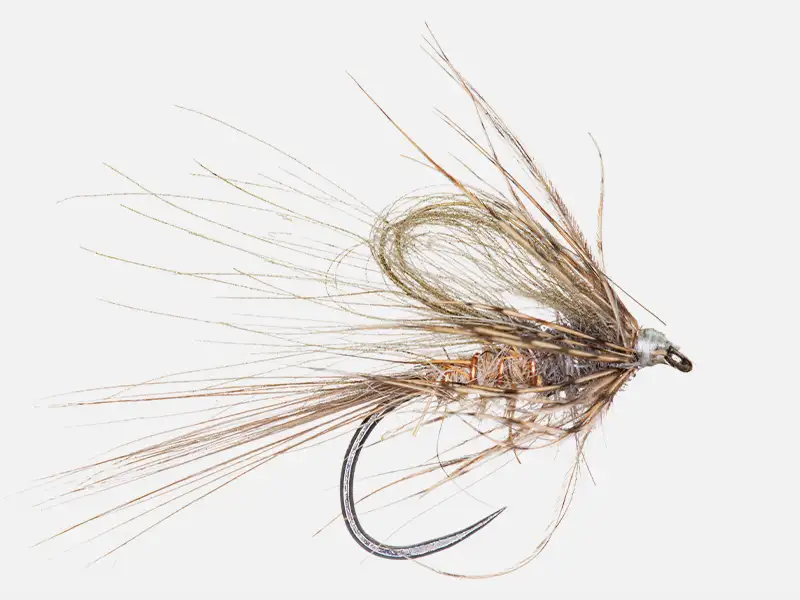
Finished fly
FOAM DRY FLIES: BUOYANCY AND REALISM
Foam dry flies represent a modern and highly effective alternative to traditional feather and dubbing patterns. The material used, a closed-cell foam, is extremely lightweight and waterproof: thanks to its sealed internal structure, it does not absorb water and keeps the fly perfectly afloat even in challenging conditions like fast currents, surface foam, or light rain.
Contrary to the idea that foam is only suitable for stylized and rough flies, today it is possible to tie highly realistic flies using this material. Precisely shaped and combined with other materials such as CDC, hackle, synthetic wings, and antennae, it allows for detailed profiles and believable proportions. In particular, flying ants, beetles, grasshoppers, caddisflies, and even large mayflies can be imitated with great accuracy using thin, well-finished foam.
Beyond realism, foam also enables the creation of highly visible flies with strong attractor power, ideal for situations where fish show no surface activity. In such cases, patterns like Stimulators or other bulky terrestrials are used to provoke an instinctive reaction, enticing trout to rise. The possibility of adding rubber legs provides additional visual and motion triggers.
In summary, foam is an incredibly versatile material that allows the creation of flies that are both buoyant and durable, as well as refined and realistic, ready to handle any surface fishing condition.
HOW TO TIE A FOAM DRY FLY
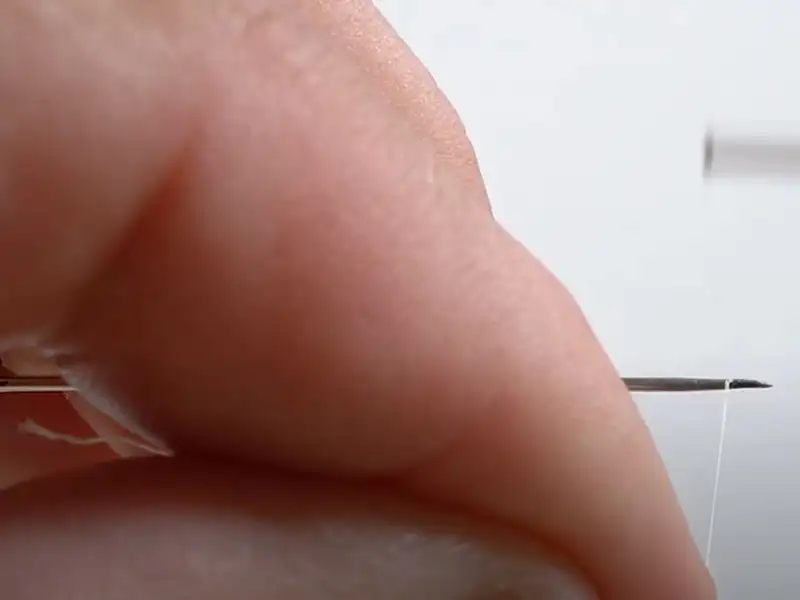
Attach the tying thread to a needle
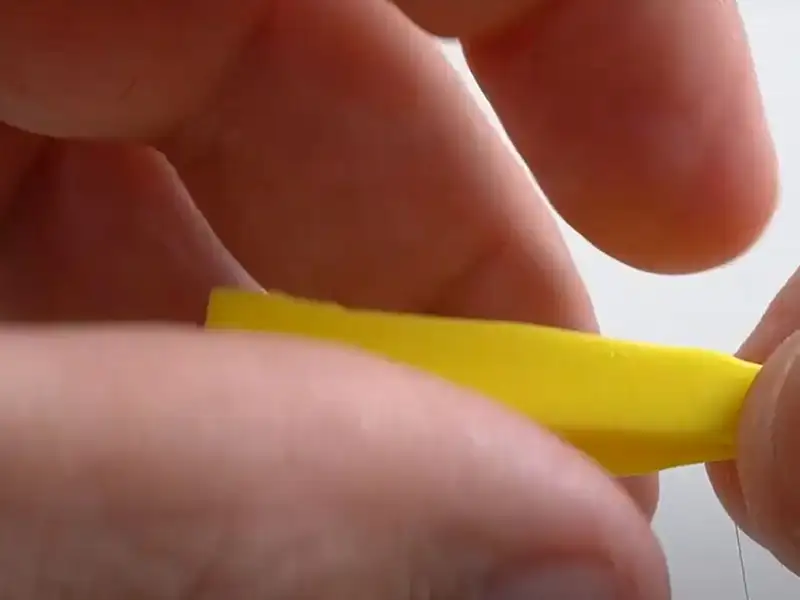
Apply a folded strip of foam to it
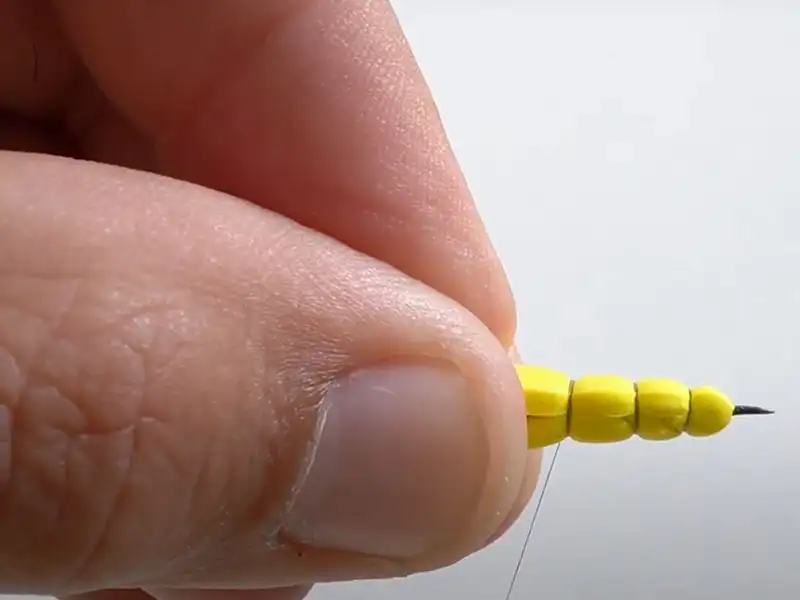
Start creating the abdomen segments with the tying thread
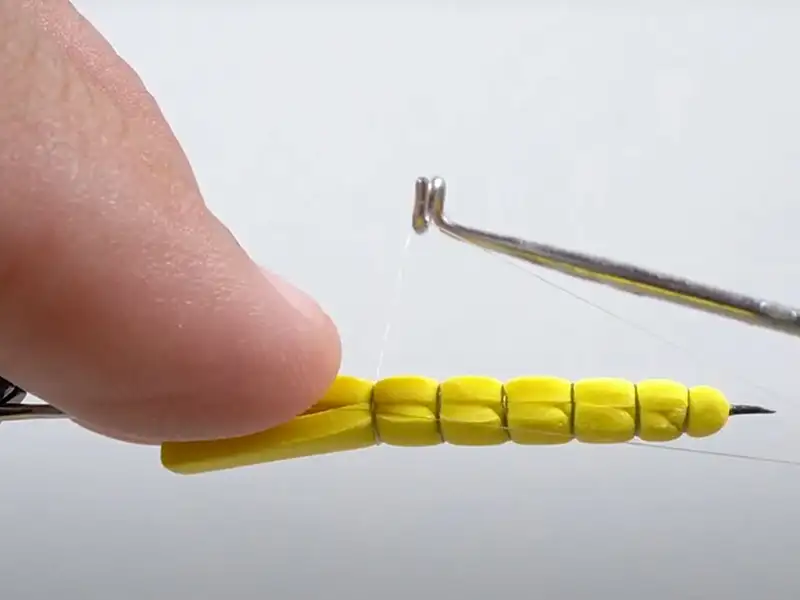
On the last segment, make a whip finish
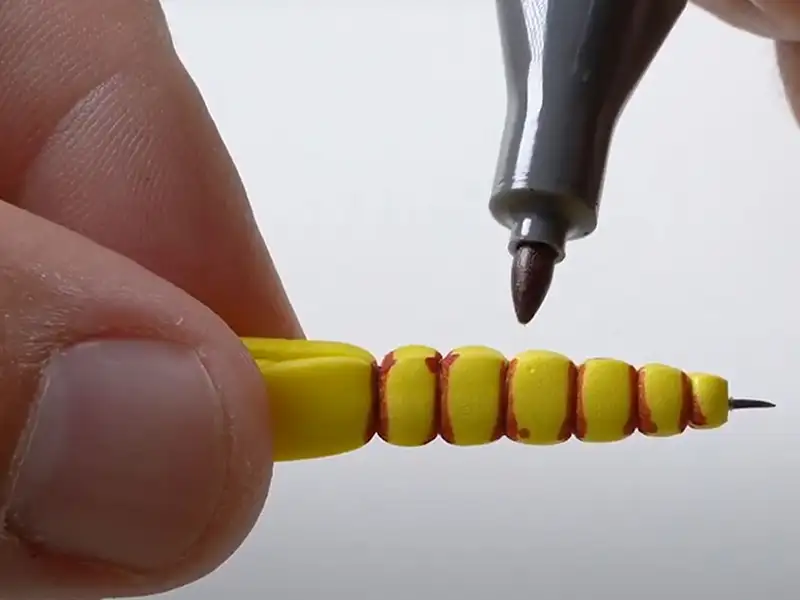
Color all segments with a dark marker
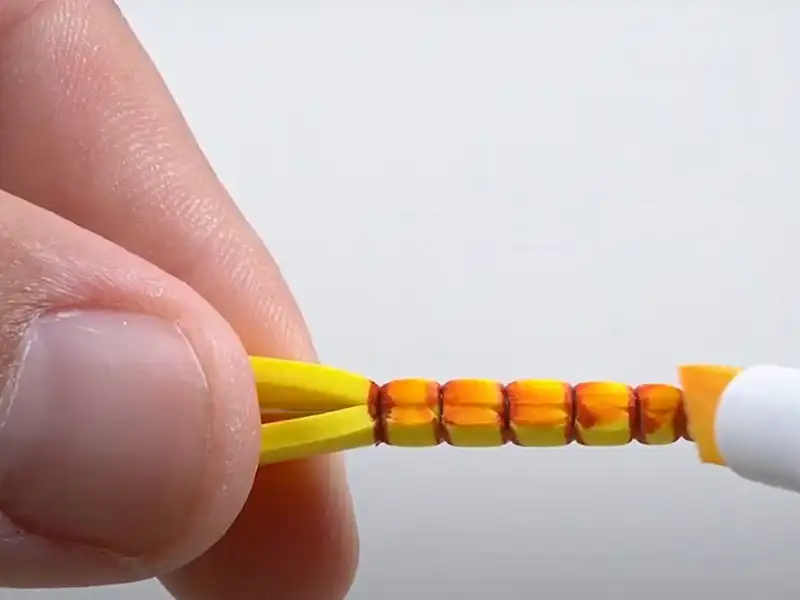
Color the entire extended body with a lighter marker
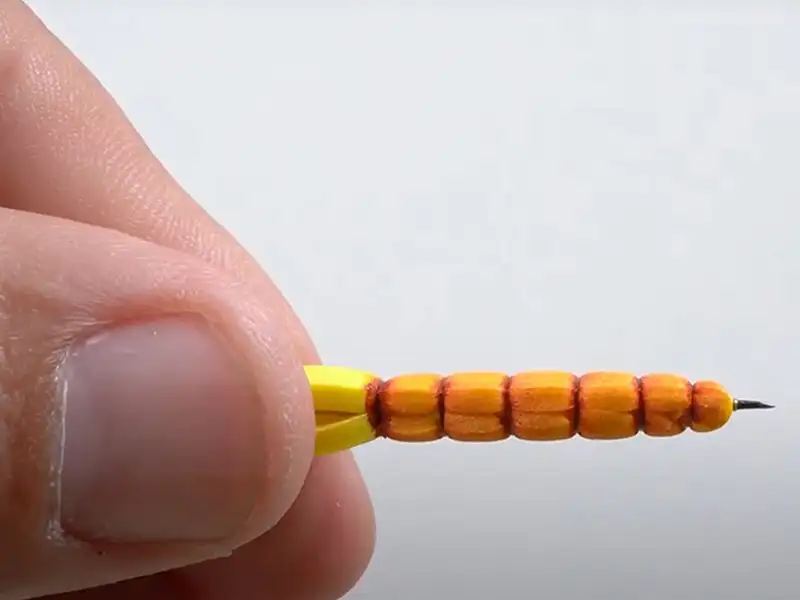
Final result
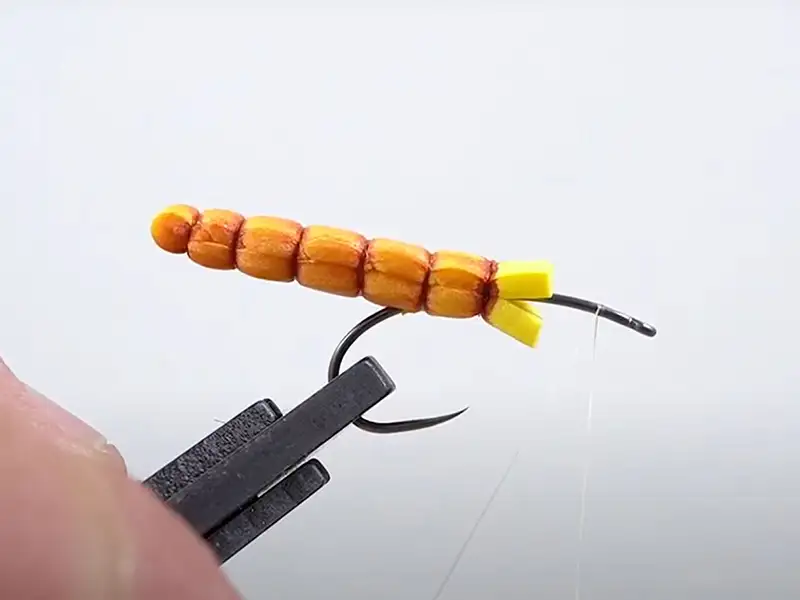
Remove the extended body from the needle and slide it onto the hook
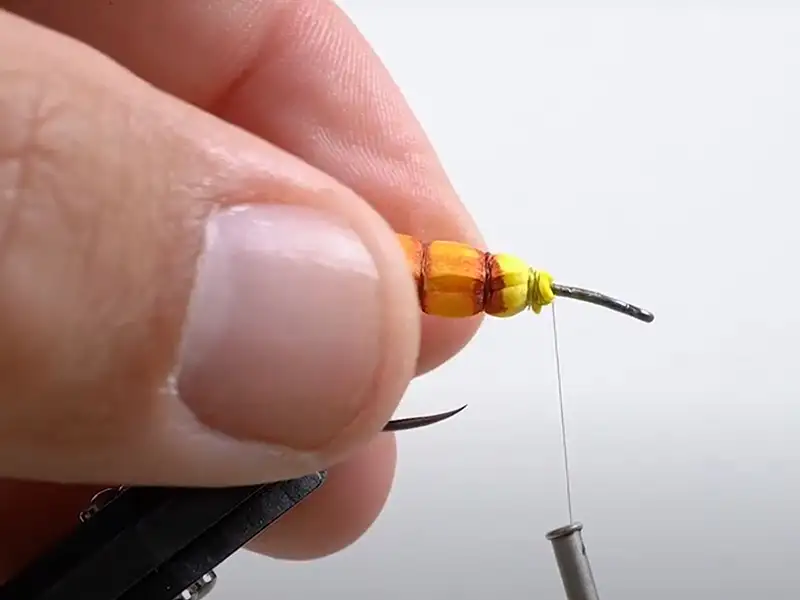
Secure the foam with tying thread
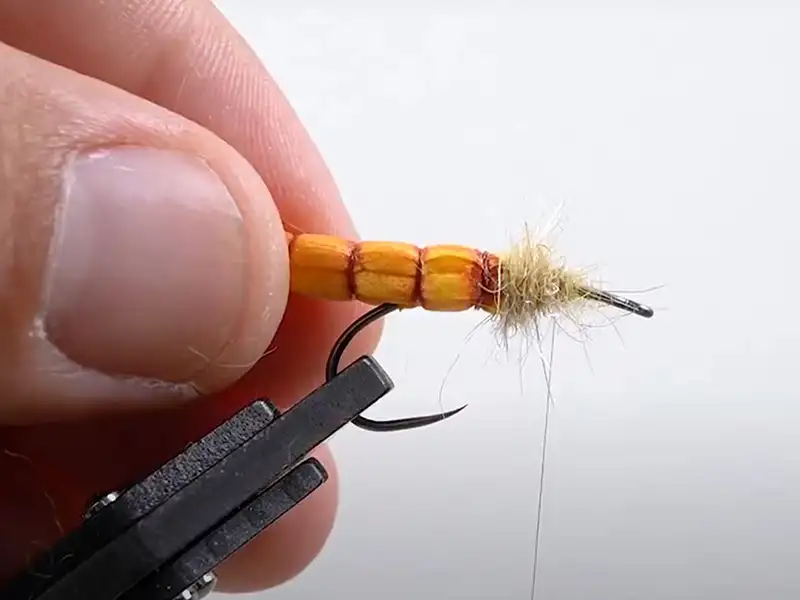
Form the thorax using dubbing
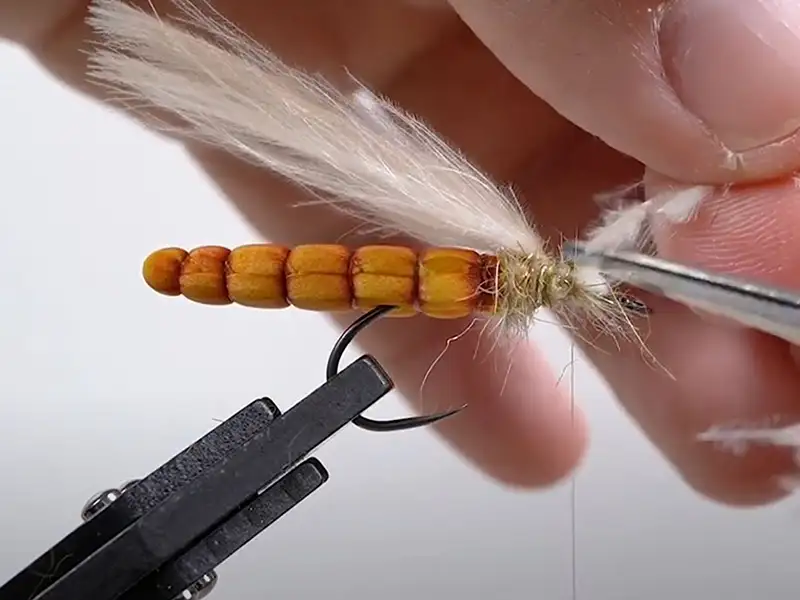
Attach a CDC feather at least as long as the extended body
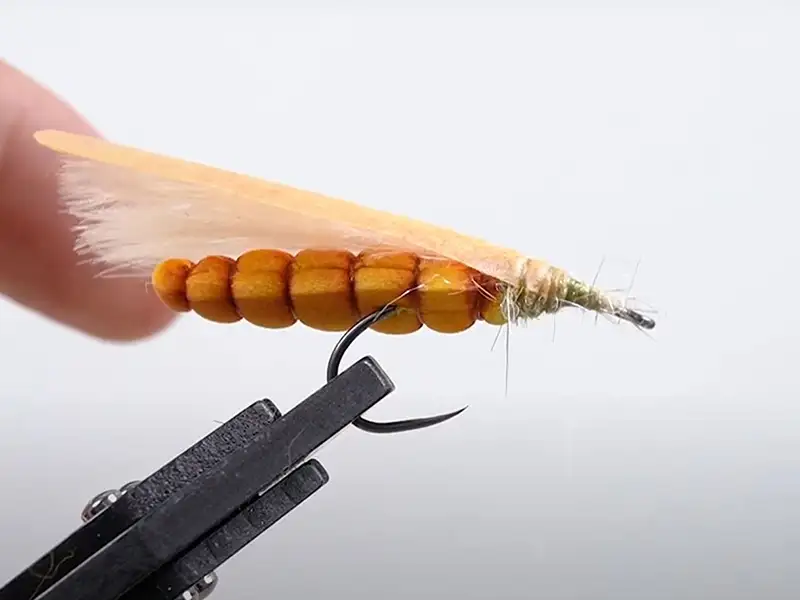
Attach a wing of the same length
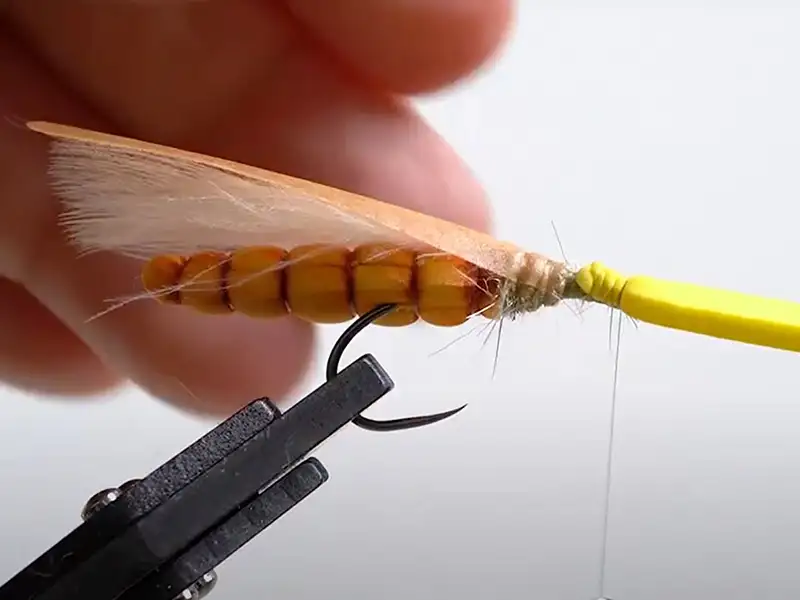
Attach a strip of foam
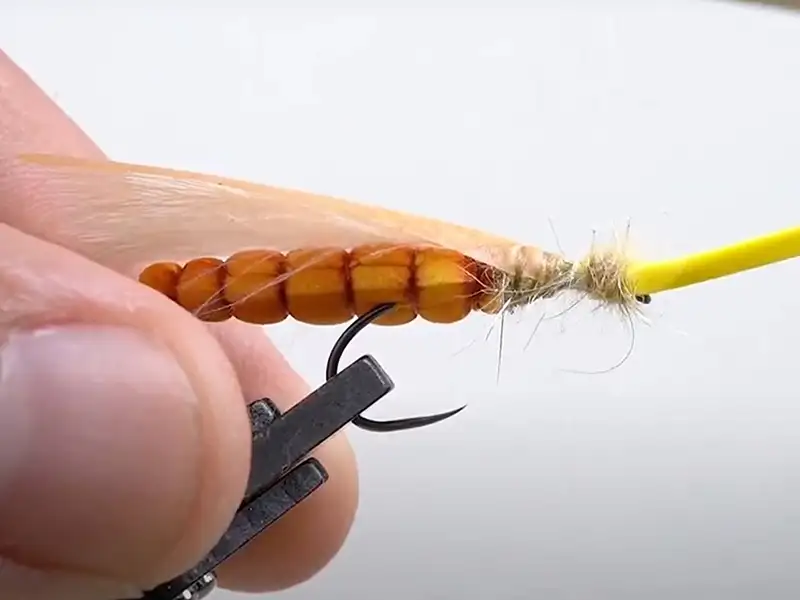
Make a few wraps with dubbing
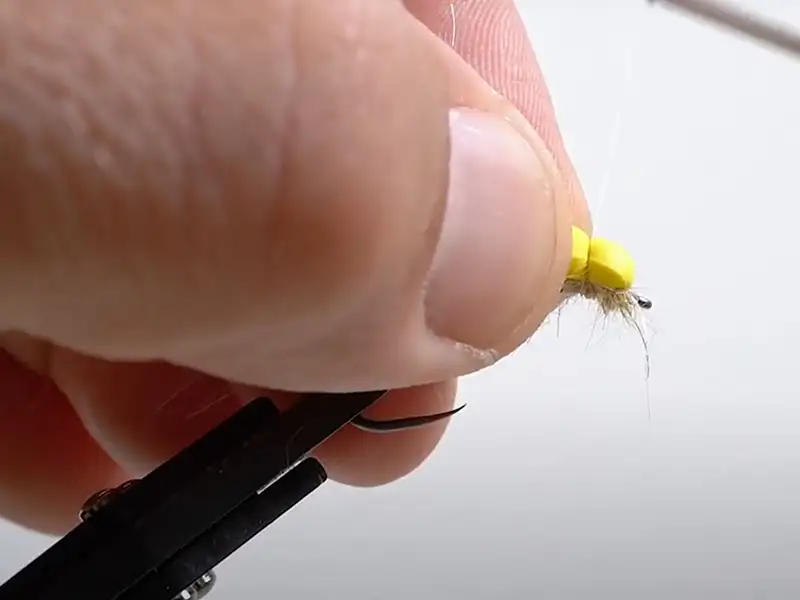
Fold the foam strip backward and secure it again
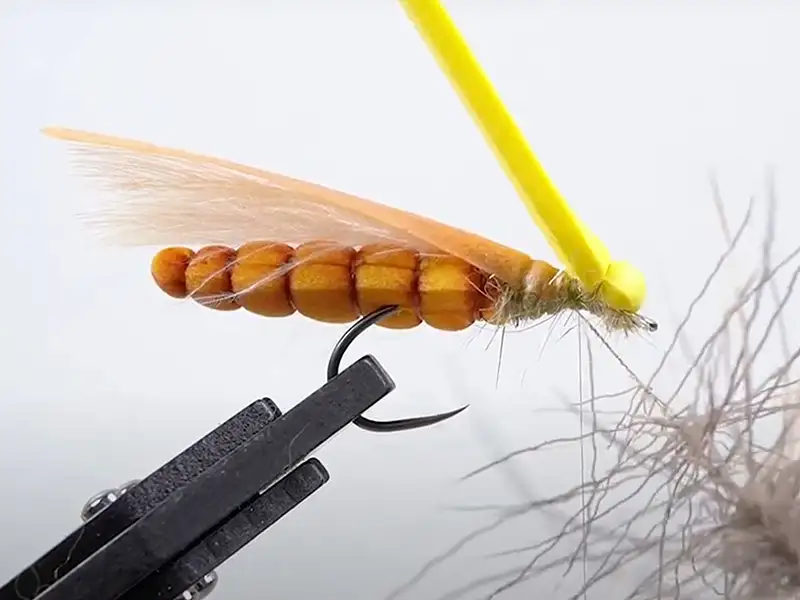
Secure the deer hair to the tying thread using the split thread technique
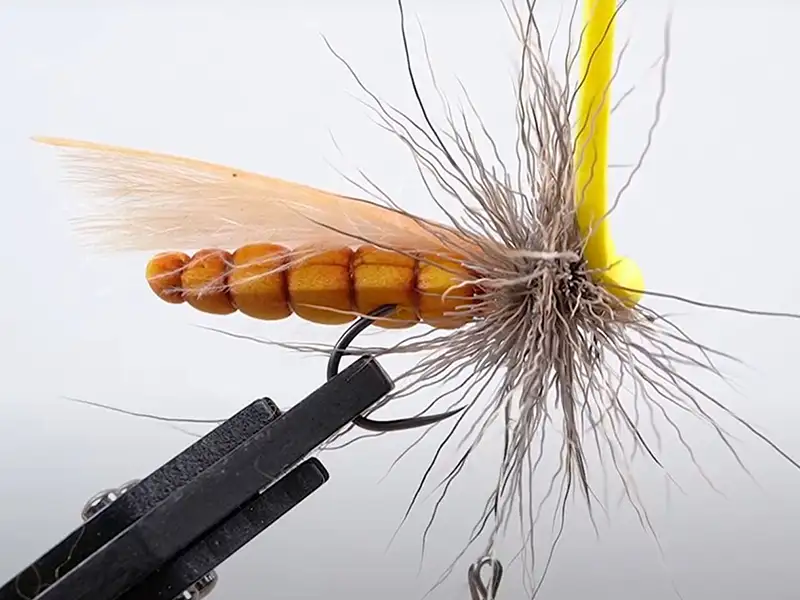
Wrap the deer hair
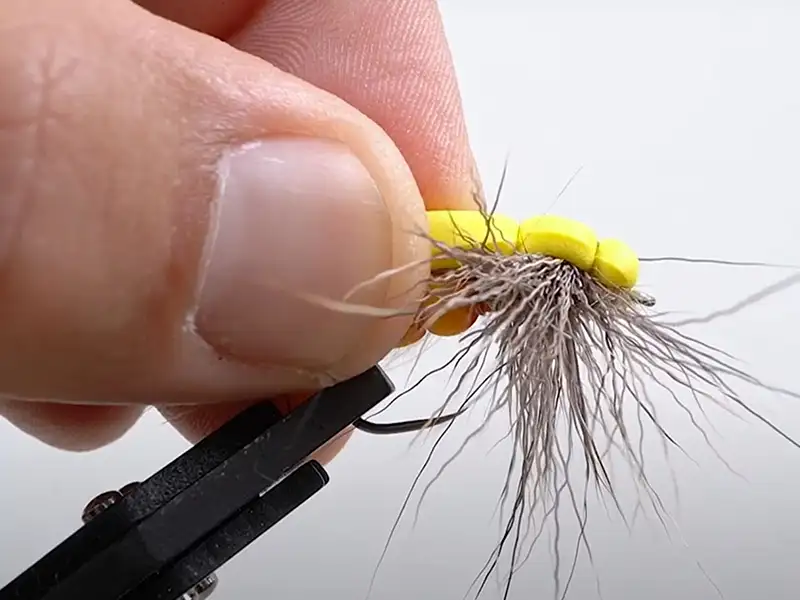
Secure the foam strip again and trim the excess
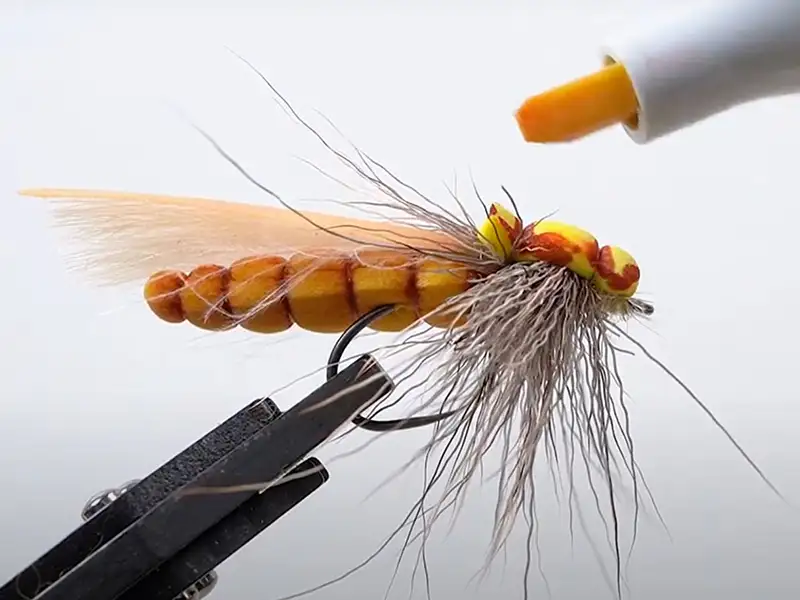
Color the foam as before
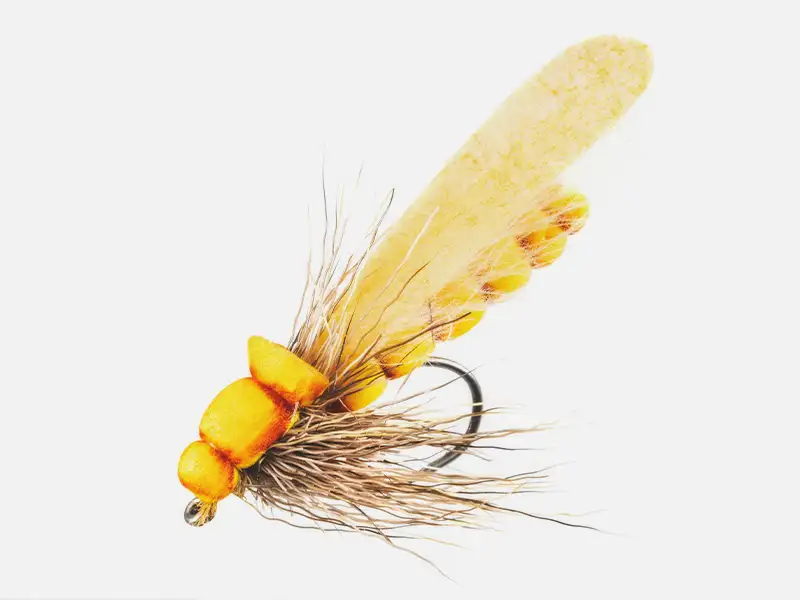
Finished fly

This might also interest you:

Fly tying – Streamers
Discover with us some tips and tricks on how to tie streamers, both for trout and pike. These flies are extremely effective because they trigger the fish’s predatory instinct, often provoking violent and adrenaline-filled strikes. If you want to catch the fish of your dreams, learning how to tie the right streamers is essential!

Tying Streamers for Pike
In this article, we’ll show you how to tie two highly effective streamers for pike fly fishing. Both are articulated patterns, and we’ll guide you through tying each one step by step.

Franco Cottarelli – The Story of a Craftsman
Franco Cottarelli is a name many fly fishers know well, closely associated with fly tying vises and inventions used by fly tyers around the world. But there is much more behind that name than a brand. It is the story of a craftsman, an inventor and a man who has spent a lifetime turning ideas and inspiration into something tangible. This is his story.
Fly tying – Streamers
Discover with us some tips and tricks on how to tie streamers, both for trout and pike. These flies are extremely effective because they trigger the fish’s predatory instinct, often provoking violent and adrenaline-filled strikes. If you want to catch the fish of your dreams, learning how to tie the right streamers is essential!
Tying Streamers for Pike
In this article, we’ll show you how to tie two highly effective streamers for pike fly fishing. Both are articulated patterns, and we’ll guide you through tying each one step by step.
Franco Cottarelli – The Story of a Craftsman
Franco Cottarelli is a name many fly fishers know well, closely associated with fly tying vises and inventions used by fly tyers around the world. But there is much more behind that name than a brand. It is the story of a craftsman, an inventor and a man who has spent a lifetime turning ideas and inspiration into something tangible. This is his story.

Fly tying for beginners
Fly fishing is a wonderful hobby. And fooling the fish with flies I've tied myself is the icing on the cake for me. That's why I want to show you in this guide how easy it is to get started in the wonderful world of fly tying and how little it takes to be able to tie your first catchy flies yourself.

Fly tying – Nymph
In this article, we’ll discuss the general characteristics of a nymph and explore why it is so effective. Additionally, through detailed videos and photos, we’ll learn how to tie some simple yet highly effective fishing dressings.

Fly Tying – March Brown
The March Brown is much more than just an artificial fly – it's a legend. With deep roots in the history of fly fishing, this pattern has endured through the centuries thanks to its effectiveness and versatility. Used since the Middle Ages, it has adapted to the needs of modern anglers without ever losing its identity.

Fly tying – carp fly
Carp fly fishing challenges the angler’s skill, patience, and attention to detail. Though commonly targeted with bait, carp are also a fascinating and selective species for fly fishing, requiring precise fly presentation and water behavior.

Fly tying – Perdigon
In this article, we’ll explore how to tie a Perdigon fly. You’ll find some interesting facts about the origin of this dressing, discover its advantages and uses, and follow a step-by-step guide—with photos and videos—to tying this highly effective pattern.

Fly Tying - Caddisfly
In this article we will see how to tie a Caddisfly throughout all its growth stages, from the larva with its "case" (Peeping Caddis), to the Pupa, and finally to its complete metamorphosis into the adult Sedge. You'll find a detailed description of the insect's various life stages, accompanied by detailed photos and videos explaining how to tie each pattern effectively.

FLY TYING: parachute fly
In this fly tying tutorial for parachute flies you will find a video of the fly-tying process, step-by-step photographs, a list of materials and tools used, and a series of parachute flies ready for fishing. What are you waiting for, come and have a look!


