

1. MARCH BROWN: A FLY THAT STANDS THE TEST OF TIME
The March Brown is much more than just an artificial fly: it’s a legend. With deep roots in fly-fishing history, this imitation has survived centuries thanks to its effectiveness and versatility. Used since medieval times, it has adapted to modern anglers’ needs without ever losing its identity.
2. THE REAL INSECT: ONE OF THE FIRST HATCHES OF THE YEAR
This fly is named after a real mayfly, which naturally appears between late March and early April. We’re talking about a sturdy insect with opaque brown wings, emerging in cold, well-oxygenated rivers typical of mountainous or hilly environments.
When the waters warm ever so slightly and spring timidly begins, the hatch begins: the nymphs leave the gravel bed to transform into winged insects dancing on the surface. This is when the March Brown takes center stage.
3. WHEN TO USE IT: SHORT WINDOWS, EXCELLENT RESULTS
The March Brown is one of the most effective flies to use at the beginning of the season, when trout start to become active after the long winter months. Its hatches, often brief but intense, occur during the middle hours of the day, creating true windows of feeding frenzy. It’s precisely during these moments that a good March Brown imitation can turn a mediocre day into one full of catches.
Artificial versions of this fly adapt to all stages of the natural insect’s life cycle, offering anglers a complete range of options depending on the situation.
3.1. MARCH BROWN WET
This is the classic submerged version, ideal for imitating the active nymph in the days leading up to the hatch. It features a body made of natural fur, soft hackle, and dark wings swept back. It works particularly well in fast and deep waters, where trout feed near the bottom.
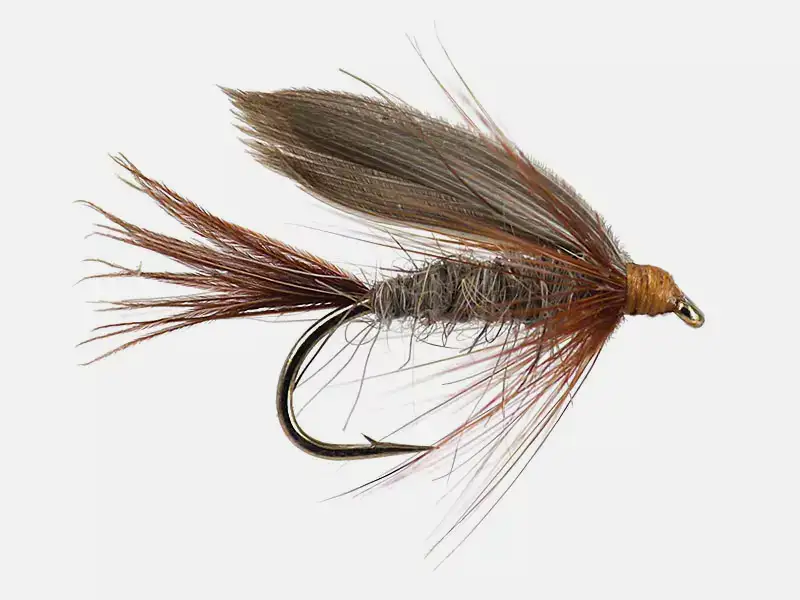
March brown wet

March brown wet
3.2. MARCH BROWN DRY
When the hatch is underway and insects are emerging on the surface, this dry version comes into play. “Upright” imitations, with vertical wings and a light hare dubbing body, perfectly simulate duns trying to dry their wings on the water. This imitation is excellent for sight fishing in calm surface conditions.

March brown dry
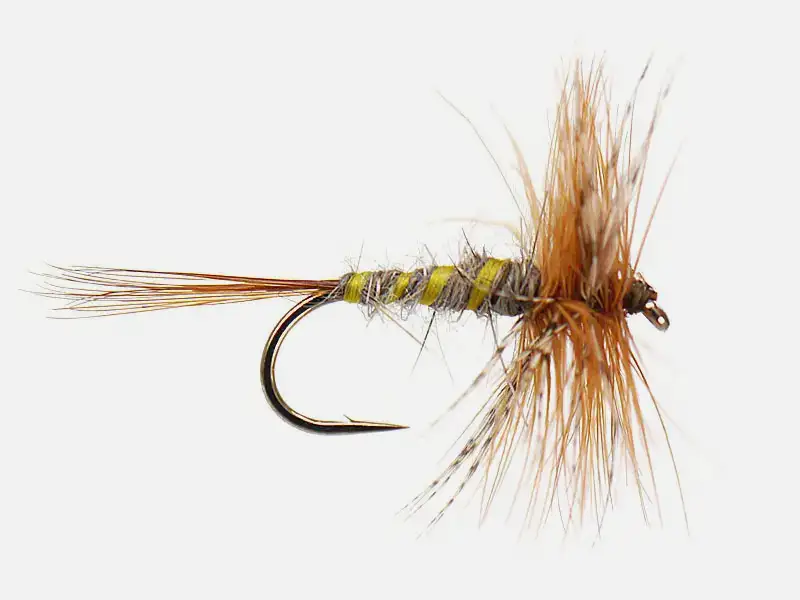
March brown dry
3.3. MARCH BROWN SPINNER
In the post-hatch phase, when the adults return to lay their eggs, the spinner version comes into play. At this stage, especially at sunset, dressings with slender bodies, translucent wings, and a horizontal position are used, capable of fooling even the most wary trout.
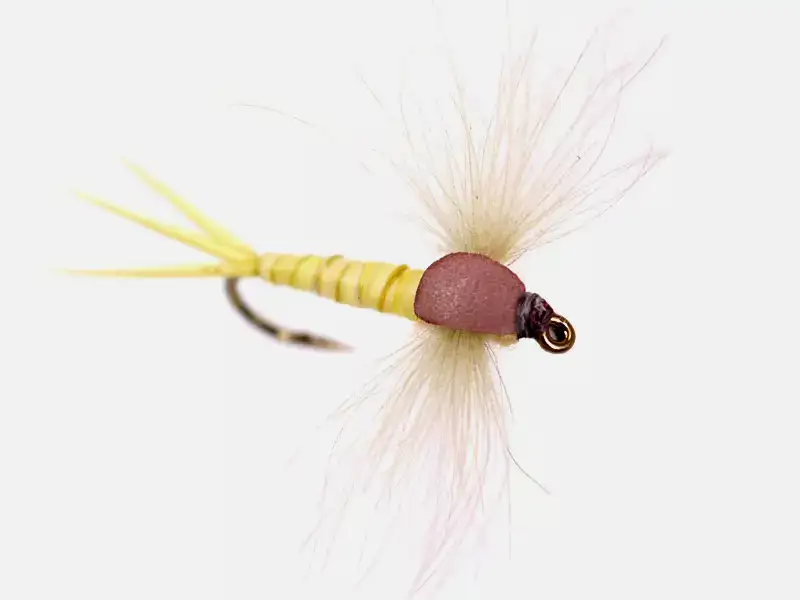
March brown spinner
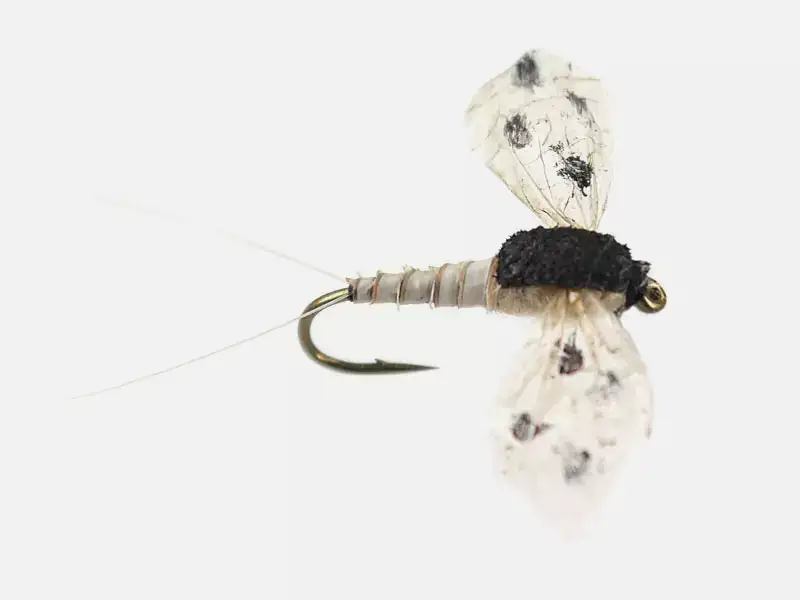
March brown spinner
Thanks to this variety of versions, the March Brown confirms itself as an essential fly in every fly fisher's box, especially when facing the early months of the season.
4. MARCH BROWN AND MAYFLY: A SUBTLE DIFFERENCE BETWEEN TWO GREAT LOOKALIKES
The March Brown and the mayfly are closely related, but not exactly the same. The term “mayfly” is a generic label referring to a broad family of aquatic insects — the ephemeroptera — which includes hundreds of species, all sharing a very similar life cycle and recognizable morphological features: slender body, translucent wings, and two or three long tails.
The March Brown, on the other hand, is a specific species within this large family. It is a typical mayfly found in cold, well-oxygenated European rivers, and it stands out for its early appearance: it is among the first to hatch, often between March and April.
Precisely because of its early seasonal activity, the March Brown tends to be slightly smaller than other later-emerging mayflies. This can be attributed to the still low temperatures and limited food availability early in the season, which affect the insect’s development. In contrast, many other mayflies that emerge later in spring or summer — such as the Green Drake or Ephemera danica — grow larger, thanks to more stable environmental conditions and abundant food sources.
For this reason, although part of the same family, the March Brown is often regarded as a distinct category in the fly-fishing world. Over time, it has earned a prominent role, deserving of dedicated imitations that are valued for their effectiveness in the early season outings. Ultimately, the difference between the two is similar to that between “bird” and “blackbird”: one is the general category, the other a specific example — and that's why they resemble each other so closely.
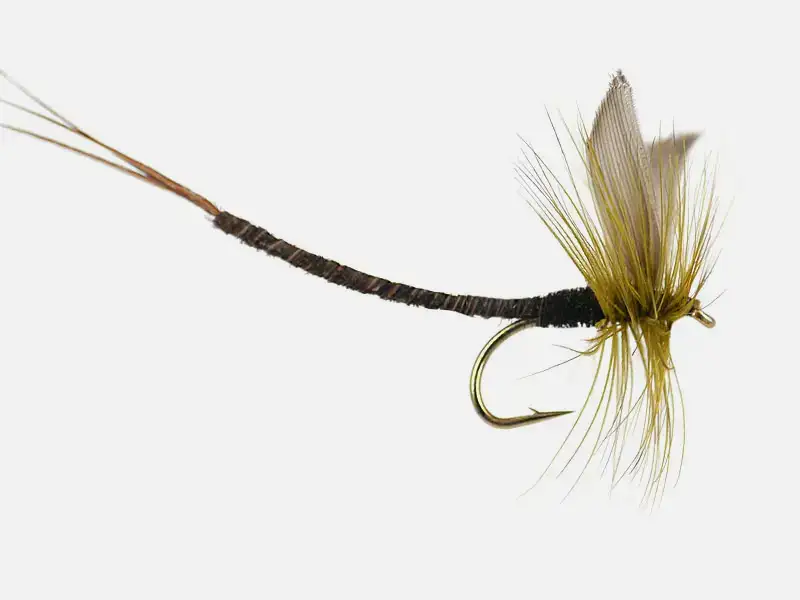
May Fly

March brown
5. WHY IT SHOULD BE IN YOUR FLY BOX
Few patterns can boast the longevity and reliability of the March Brown. It is a "four-season" fly in cold-water rivers, but its prime time is between March and May. Whether you prefer nymph or dry fly fishing, this imitation allows you to adapt to the different stages of the natural insect’s life cycle.
6. OUR TUTORIALS
March Brown - Dry Fly

Tie in the tying thread

Tie in some pheasant fibres to form the tail

Tie in a piece of copper wire

Create the body using rabbit fur

Wrap the copper wire previously tied in

Tie in a CDC feather

Using the Split Thread method, create a rabbit fur brush in a different shade

Keep the fibres swept backward and make a few thread wraps

Finish with a whip finish knot

Finished fly
March Brown - Wet Fly

Tie in the tying thread

Tie in a piece of copper wire

Create the body using light rabbit fur

Form the head using dark rabbit fur

Wrap the copper wire previously tied in

Tie in a partridge feather

Wrap the partridge feather while keeping the fibres angled backward

Keep the fibres swept backward and make a few thread wraps

Finish with a whip finish knot

Finished fly
INDEX:

This might also interest you:

Fly tying – Streamers
Discover with us some tips and tricks on how to tie streamers, both for trout and pike. These flies are extremely effective because they trigger the fish’s predatory instinct, often provoking violent and adrenaline-filled strikes. If you want to catch the fish of your dreams, learning how to tie the right streamers is essential!

Tying Streamers for Pike
In this article, we’ll show you how to tie two highly effective streamers for pike fly fishing. Both are articulated patterns, and we’ll guide you through tying each one step by step.

Franco Cottarelli – The Story of a Craftsman
Franco Cottarelli is a name many fly fishers know well, closely associated with fly tying vises and inventions used by fly tyers around the world. But there is much more behind that name than a brand. It is the story of a craftsman, an inventor and a man who has spent a lifetime turning ideas and inspiration into something tangible. This is his story.
Fly tying – Streamers
Discover with us some tips and tricks on how to tie streamers, both for trout and pike. These flies are extremely effective because they trigger the fish’s predatory instinct, often provoking violent and adrenaline-filled strikes. If you want to catch the fish of your dreams, learning how to tie the right streamers is essential!
Tying Streamers for Pike
In this article, we’ll show you how to tie two highly effective streamers for pike fly fishing. Both are articulated patterns, and we’ll guide you through tying each one step by step.
Franco Cottarelli – The Story of a Craftsman
Franco Cottarelli is a name many fly fishers know well, closely associated with fly tying vises and inventions used by fly tyers around the world. But there is much more behind that name than a brand. It is the story of a craftsman, an inventor and a man who has spent a lifetime turning ideas and inspiration into something tangible. This is his story.

Fly tying for beginners
Fly fishing is a wonderful hobby. And fooling the fish with flies I've tied myself is the icing on the cake for me. That's why I want to show you in this guide how easy it is to get started in the wonderful world of fly tying and how little it takes to be able to tie your first catchy flies yourself.

Fly tying – Nymph
In this article, we’ll discuss the general characteristics of a nymph and explore why it is so effective. Additionally, through detailed videos and photos, we’ll learn how to tie some simple yet highly effective fishing dressings.

Fly tying – carp fly
Carp fly fishing challenges the angler’s skill, patience, and attention to detail. Though commonly targeted with bait, carp are also a fascinating and selective species for fly fishing, requiring precise fly presentation and water behavior.

Fly tying – Perdigon
In this article, we’ll explore how to tie a Perdigon fly. You’ll find some interesting facts about the origin of this dressing, discover its advantages and uses, and follow a step-by-step guide—with photos and videos—to tying this highly effective pattern.

Fly Tying - Caddisfly
In this article we will see how to tie a Caddisfly throughout all its growth stages, from the larva with its "case" (Peeping Caddis), to the Pupa, and finally to its complete metamorphosis into the adult Sedge. You'll find a detailed description of the insect's various life stages, accompanied by detailed photos and videos explaining how to tie each pattern effectively.

How to tie a dry fly
The article describes dry flies in fly fishing, illustrating materials, characteristics, and tips for tying them effectively. It offers useful insights both for beginners and for those looking to refine their skills.

FLY TYING: parachute fly
In this fly tying tutorial for parachute flies you will find a video of the fly-tying process, step-by-step photographs, a list of materials and tools used, and a series of parachute flies ready for fishing. What are you waiting for, come and have a look!


