

ORIGINS, PHILOSOPHY AND TECHNIQUE OF TENKARA FISHING
Tenkara fishing is born from an ancient story that spans across cultures and continents—a story that connects people who may be far apart, yet share the same passion, driven by the same instinct and drawn to the same environments. It is a story of mountains and streams, of trout and waterfalls, of rocks and insects: Tenkara is the purest and most authentic way to experience fly fishing in moving water.
After such a declaration of love, one might expect a poetic text full of existential metaphors—but that’s not what you’ll find here. Let’s stay focused and explain what truly inspires such strong emotions.
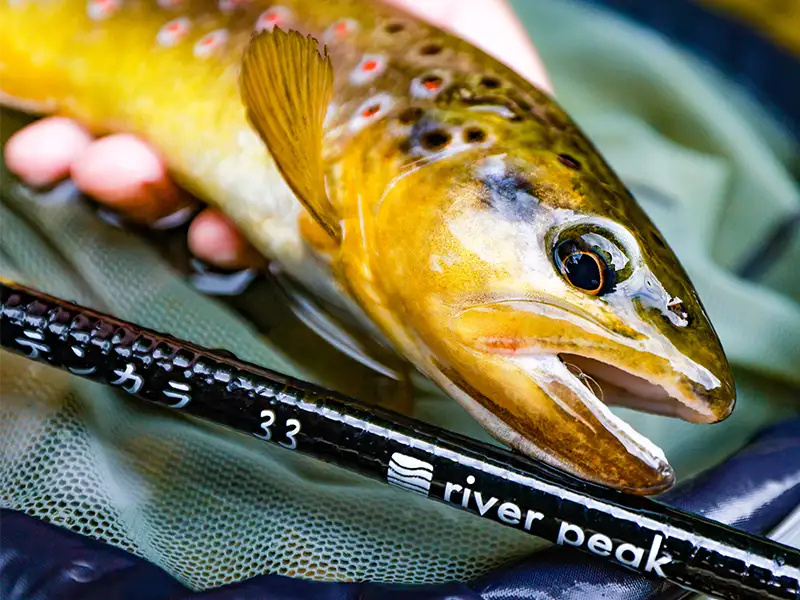
© Corbupics
WHAT IS TENKARA FISHING – IN SHORT
Tenkara fishing is a minimalist technique that originated in Japan for fishing small streams. It is practiced with a fixed rod without a reel, a light line, and a simple fly (kebari), focusing on precision, sensitivity, and direct control. Its greatest strength lies in its simplicity: less gear, less clutter, and more focus on the fishing experience itself. This makes it ideal both for beginners and for experienced anglers looking for a more refined, effective, and immersive approach to small-stream fishing.
1. WHERE DID TENKARA FISHING ORIGINATE?
Tenkara originated as a professional method of fishing mountain streams in the heart of Japan—a land rich in tradition. Its purpose was to supply fish to mountain inns, feeding travelers, supporting innkeepers, and sustaining the fishermen’s families. It was never meant as a recreational activity, but rather as a practical and purposeful technique, refined over time with a clear focus on efficiency and effectiveness.
The spirit of Japanese minimalism—cutting away excess, reducing movement, and elevating the harmony between form and function—is the very same instinct that drives anyone with an empty stomach and the urgency to fill it. That is the deeper reason behind its perfection. From my perspective, a beautiful example of intangible cultural heritage.
As mentioned, Tenkara is an ancient story. It is a story that runs along the line, travels through the rod, and ends in our hands; a story that speaks of currents, eddies, rocks, flies, and stream-dwelling fish. The skill of the angler, in service of survival.
Hunger is the greatest motivation for refining technique.
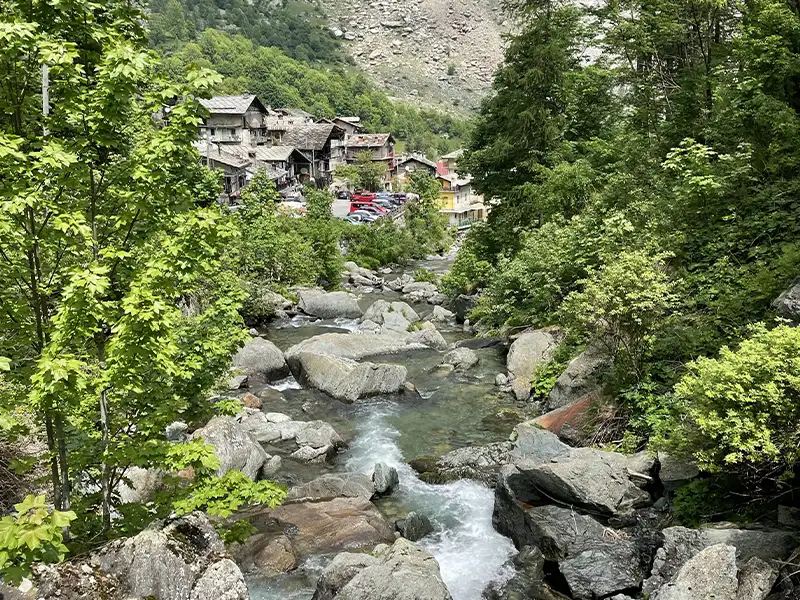
© Corbupics
2. FROM TRADITION TO MODERN TENKARA FISHING
Today, times have changed. We no longer approach the stream out of necessity, and so the mindset has shifted—from survival to recreation. Materials have evolved, and our days on the water have become more enjoyable; hunger has given way to a search for tranquility, and empty stomachs have been replaced by minds seeking joy.
Tenkara fishing experienced a revival in the 21st century, largely thanks to the curiosity and passion of an American angler, Daniel Galhardo (Tenkara USA). After discovering the technique in Japan, he fell in love with it and began sharing videos and content, bringing awareness of Tenkara to anglers around the world. In Japan itself, however, it remains a niche technique—a preserved tradition that struggles to compete with modern fly fishing or spinning. In fact, if you visit fishing shops in Tokyo, you’ll often find it surprisingly difficult to locate Tenkara gear, while other methods dominate the shelves.
Fortunately, the internet has made it possible for passionate anglers to connect directly with rod makers. Small Japanese manufacturers suddenly found an international market for their Tenkara rods—something for which we enthusiasts can be truly grateful.
Thanks to the dedication of these small producers, we can now fully enjoy the pleasures of modern Tenkara fishing. It is a celebration of lightness: rods weighing between 40 and 100 grams, synthetic lines, nearly invisible tippets, and fine-wire hooks. The entire setup fits into a single pocket if needed, and the sense of freedom is unmatched. This approach minimizes weight and bulk, allowing you to focus on what truly matters: enjoying the most rewarding aspects of fishing to the fullest.
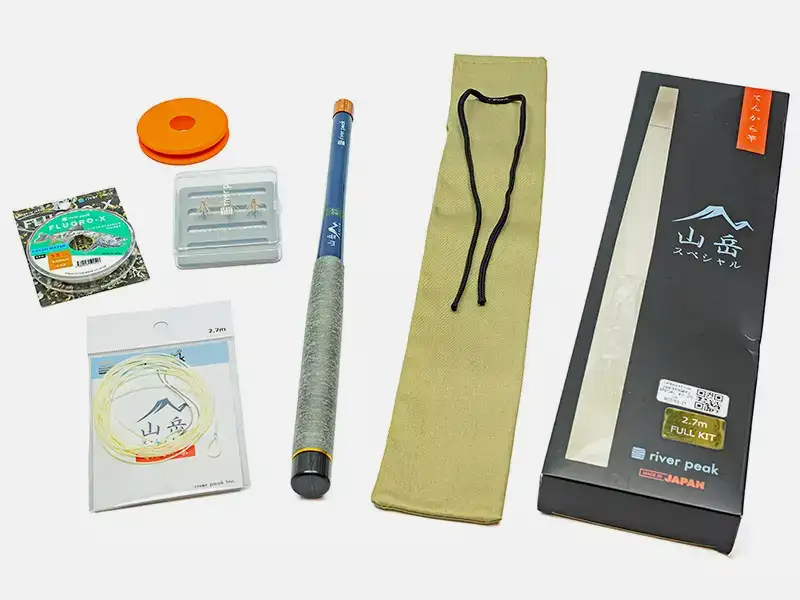
Complete Tenkara kit – everything you need to get started

Ultra-compact thanks to the telescopic design
3. THE TECHNIQUE OF TENKARA FISHING
Let’s take a closer look at the details—starting with the equipment, and more specifically, the casting technique.
3.1. THE ROD
The rod is reel-less and typically measures between three and five meters in length, with varying degrees of stiffness. Traditionally, rods were even longer and made from lightweight bamboo. Today, they are telescopic and constructed from high-quality carbon. A 4-meter rod collapses down to around half a meter when closed, making it extremely compact and easy to transport. It’s not uncommon to carry four or five rods in a rod tube attached to a backpack, allowing you to comfortably adapt to different sections of a stream throughout the day.
Rod action is expressed as a ratio between stiffer and softer sections that make up the blank: 8:2, 7:3, 6:4, and 5:5, in decreasing order of stiffness.
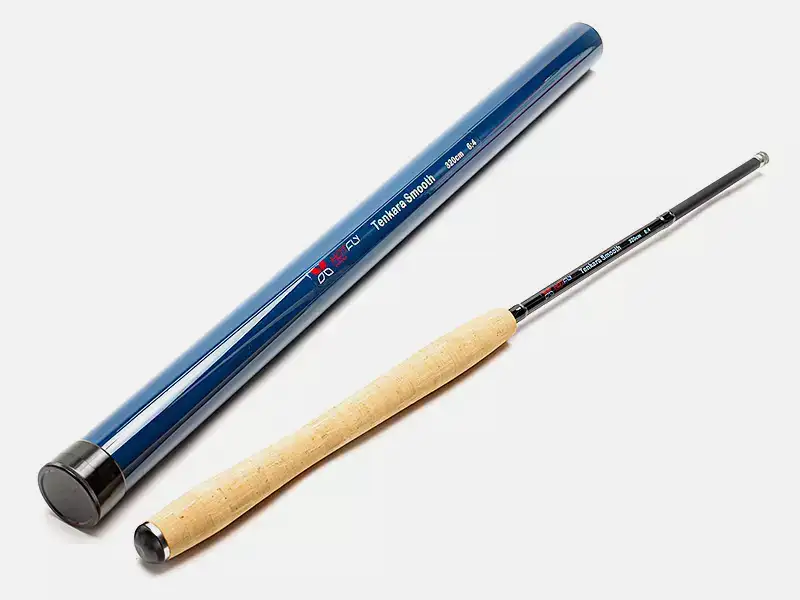
Elegant and minimalist, with no guides or reel seat
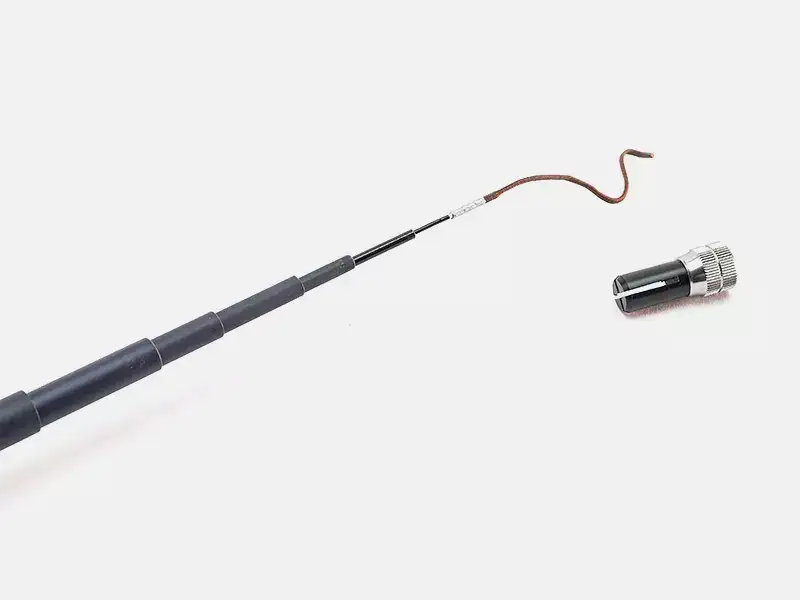
The lilian, where the line is attached
3.2. THE LINE
Originally, Tenkara setups used a tapered line made from braided horsehair, gradually decreasing in thickness toward the hook. This clever design allows the line to fully extend without the need for added weight at the end—one of the most fascinating aspects of the system, and a clear expression of ingenuity born from necessity. Today, the range of Tenkara lines is much broader, ranging from fluorocarbon level lines—a single, highly visible strand—to furled lines, composed of multiple braided strands that perform particularly well in windy conditions thanks to their added mass.
Balancing the power of the rod with the diameter of the line improves both sensitivity and responsiveness on the water. It allows you to feel the tension of the tippet, the contact with the riverbed, the currents shaping your drift—and, most importantly, the takes.
Choosing the right line ultimately comes down to personal preference, especially in terms of visibility, rod power, and the size of the kebari you use most often. Taking these factors into account will help you build an effective setup, making your fishing more efficient and allowing you to adapt smoothly to different situations.
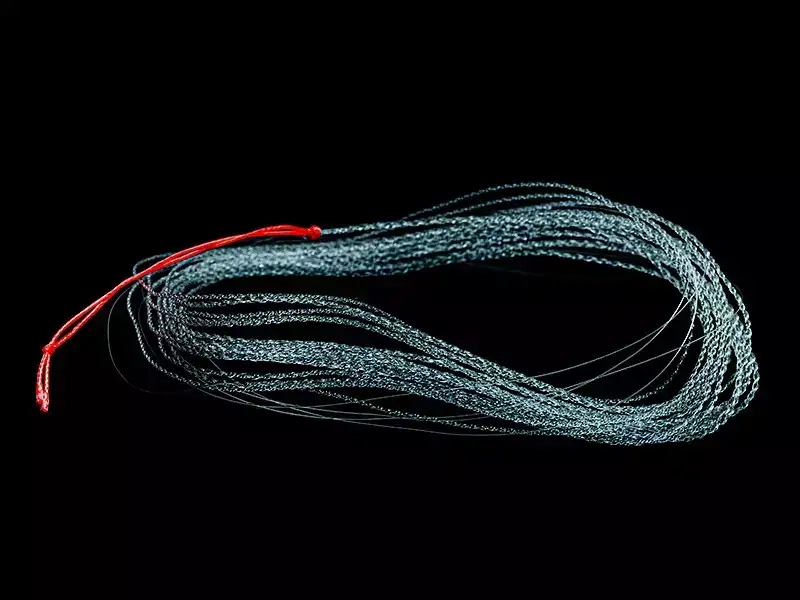
Tapered braided line, also known as a furled line
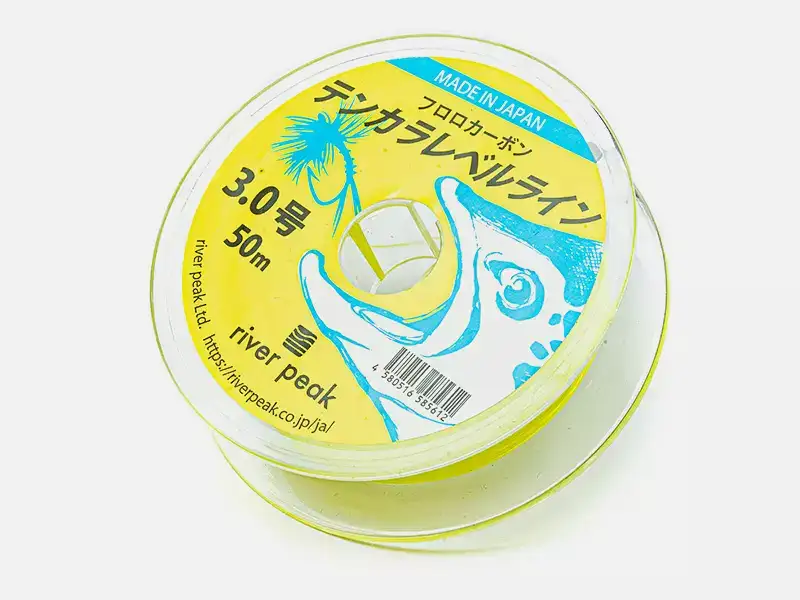
High-visibility yellow fluorocarbon level line
3.3. KEBARI – THE TENKARA FLY
The traditional flies, the well-known kebari, are the result of observation and experience. They are not imitative flies in the Western sense—designed to replicate specific stages of aquatic insects—but rather patterns that emphasize movement. They are dynamic forms that continuously contract and expand, designed to pulse in the water and trigger the fish’s instinct to strike.
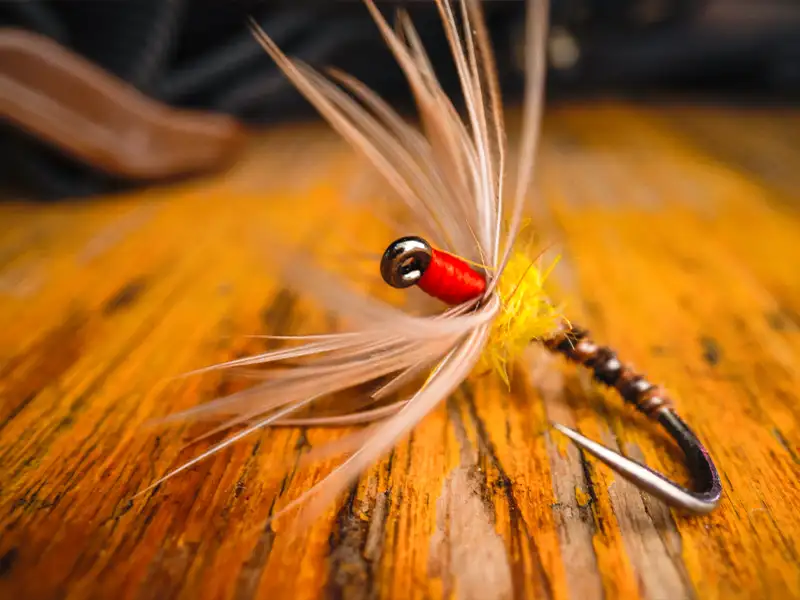
© Corbupics
They are perhaps the most elegant expression of a fishing approach shaped by necessity—the need to fill the basket. Maximum efficiency with minimal effort: simple materials, intelligent design, endless practice, and a refined understanding of the most effective movements. A true testament to human ingenuity and adaptability. Interestingly, they closely resemble the flies used in the Italian Valsesiana tradition, both in appearance and tying technique—a method developed independently, yet showing remarkable similarities to Tenkara.
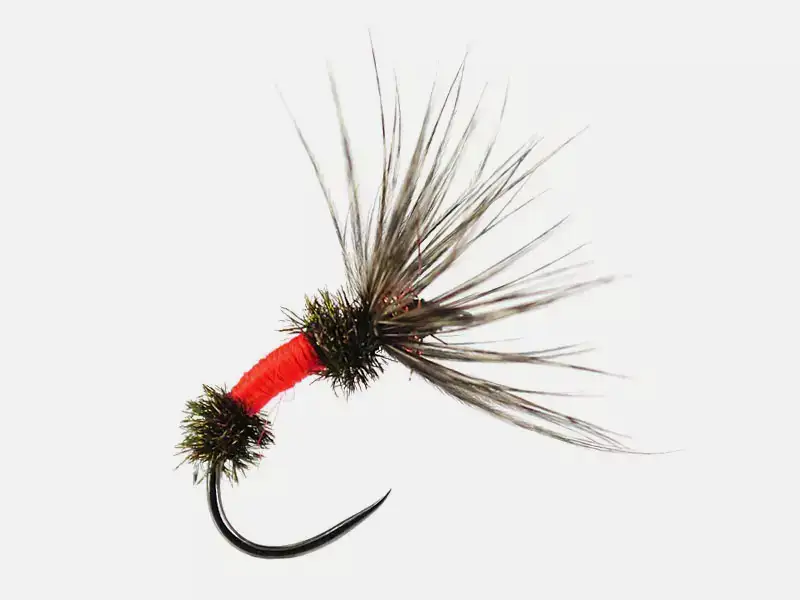
The classic kebari flies…
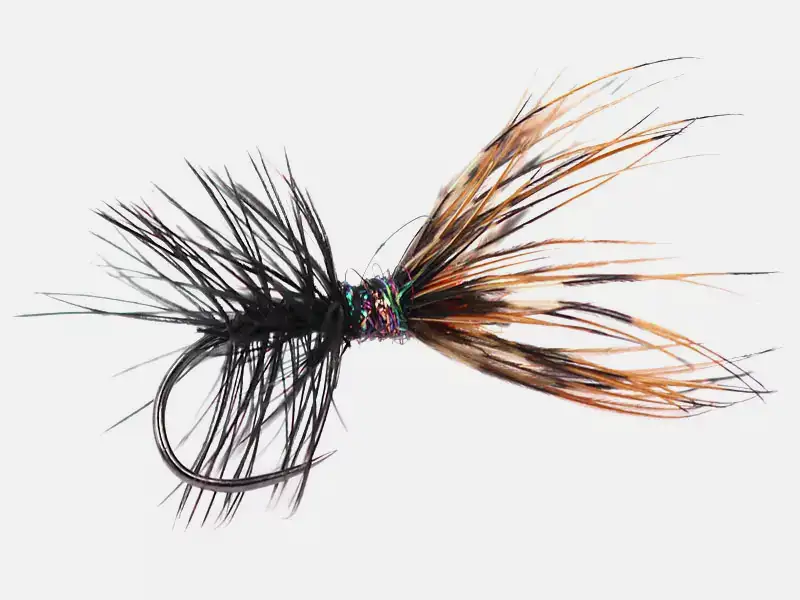
…highly effective thanks to their pulsing movement
4. HOW IS TENKARA FISHING PRACTICED?
How is Tenkara actually practiced on the water? The word “Tenkara” can be interpreted as “from the sky”—referring to the origin of the presentation. The fly arrives from above, touches the water’s surface, breaks through it, and is carried downward by currents and eddies. That’s where the real magic begins: the angler’s manipulation of the fly—its pulses, pauses, and subtle vibrations.
One of the greatest advantages is how quickly the basic technique can be learned. With just a day spent alongside a friend or a professional guide, most anglers become fully independent and are able to catch fish on their own.
4.1. THE CAST
The basic cast is typically performed at a 45° angle relative to the water’s surface, allowing the fly to land first. There’s nothing overly complex about it—yet at the same time, everything about it is refined. A few false casts are used to fully extend the line, followed by the decisive moment of presentation, where the fly must touch the water before the tippet. It may seem simple—and it is—but mastering the different casting and presentation techniques can take a lifetime.
Experienced anglers often use lines that are more than twice the length of the rod to reach greater distances, especially in open environments where there’s enough space to extend long lengths of line without risk of tangling. It’s a beautiful sight—and a goal worth striving for. Personally, however, I rarely go beyond the length of the rod.
4.2. SENSITIVITY
A fundamental concept in Tenkara fishing. Sensitivity is the key to becoming an active part of this great, shared story—of people taking on mountain streams and rivers in search of fish.
Rods come with different handle materials, ranked by sensitivity: direct carbon, bamboo, cork, or EVA foam. Each transmits the subtle signals from the kebari to your hand in its own way, and each should be experienced firsthand to discover your personal style of fishing.
4.3. HOW MANY RODS SHOULD YOU USE IN TENKARA FISHING?
How many rods do you actually need for a day on the water? The fact that Tenkara rods collapse into an extremely compact size and are incredibly lightweight makes it easy to carry more than one. A standard rod tube with a diameter of around 10 cm can easily hold up to eight rods.
For a typical outing, it’s best to have at least three rods available. This allows you to adapt to different fishing situations, striking the right balance between versatility and specialization—without losing the minimalist spirit. Personally, I recommend a 3.6 m rod with a 6:4 action for general fishing, a 3.6 m 7:3 rod when larger fish are expected, and a 3 m rod for more technical or confined environments. For more open waters and larger streams, rods of 3.9 m or even 4.5 m are excellent choices.
5. CONCLUSION: WHY CHOOSE TENKARA FISHING
Tenkara rods are fantastic tools for pure enjoyment and for experiencing that unique sense of freedom that only fixed-line fishing can provide—thanks to the direct connection with the fish. Don’t just collect them because they are beautiful objects—take them to the water and truly use them. You’ll be glad you did.

© Corbupics
6. FREQUENTLY ASKED QUESTIONS ABOUT TENKARA FISHING
CONTENTS:
Yes, it is a very intuitive technique that can be learned quickly. Within just a few hours, you can grasp the basics and start fishing independently.
Tenkara eliminates the reel and simplifies the setup to the essentials. This creates a more direct connection to the fly and enhances sensitivity while fishing.
It is best suited for small streams and mountain rivers, where precision and control are more important than casting distance.
A single rod is enough to begin. Over time, having multiple rods allows you to handle different situations more effectively.
It depends on your rod, the conditions, and your personal preferences. Level lines are versatile and lightweight, while furled lines offer greater stability in windy conditions.
Kebari are the flies used in Tenkara fishing. Unlike traditional flies, they don’t imitate a specific insect form but rather replicate movement in the water, making them highly effective.
No—and that’s one of its greatest strengths. The gear is reduced to the essentials and can often be carried conveniently in a single pocket.
A typical starter setup includes a 3.6 m rod with a 6:4 action, a furled line matching the rod length, a fluorocarbon tippet, and a small selection of kebari or traditional flies—everything you need to get going.

This might also interest you:

LEARNING TO FLY FISH - easier than you think!
Fly fishing is more than just a hobby, it is a fascinating passion. If you want to learn how to fly fish, take a look at our guide and learn everything you need to know about fly fishing for beginners.

Understanding AFTMA Line Classes – Why Fly Line Weight Matters
The weight of a fly line determines how your rod loads and performs – but AFTMA line classes involve much more than just a number. In this article, you’ll learn in a clear and practical way how line weights, tapers and modern fly rods interact. Understanding these principles will help you choose the right fly line for any rod and improve your casting on the water.
LEARNING TO FLY FISH - easier than you think!
Fly fishing is more than just a hobby, it is a fascinating passion. If you want to learn how to fly fish, take a look at our guide and learn everything you need to know about fly fishing for beginners.
Understanding AFTMA Line Classes – Why Fly Line Weight Matters
The weight of a fly line determines how your rod loads and performs – but AFTMA line classes involve much more than just a number. In this article, you’ll learn in a clear and practical way how line weights, tapers and modern fly rods interact. Understanding these principles will help you choose the right fly line for any rod and improve your casting on the water.

EURO NYMPH - a complete tutorial to get started
With this compact tutorial to Euro Nymph style fly fishing, we wanted to give some basic advice to anyone approaching this very effective and successful fishing technique. Even if you already have some experience, you probably will find some useful information, tips and tricks you did not know yet.

Fly Line to Backing Connections
How much backing do you actually need on a fly reel and which knot is best for creating a secure connection between backing and fly line? In this article, we’ll show you the most important connection methods, explain the advantages of Nail Knots and Loop-to-Loop connections, and cover everything you should know about backing capacity, breaking strength and properly spooling your reel.

Classic Nymph Fishing: Development, Technique and Tactics
Nymph fishing is considered one of the most effective – and at the same time one of the most demanding – methods in fly fishing. But what truly lies behind this technique? In this article, you learned how nymph fishing evolved, which concepts remain relevant to this day and why many anglers regard it as the supreme discipline of fly fishing.

Perfection Loop: Instructions, Advantages and Uses in Fly Fishing
The Perfection Loop is one of the most important knots in fly fishing – strong, compact and highly versatile. In this article, we’ll show you step by step how to tie this loop knot cleanly and easily. You’ll also learn when it’s especially useful and how to apply it effectively on the water.

What are the benefits of a day with a professional fly casting instructor?
Admittedly, I was a bit sceptical at first - after all, I've been fly fishing for 15 years! I also catch my fish without any problems. So what would a day with a certified casting instructor do for me?


