

How the System Behind Fly Line Weights Works
Anyone standing by the water with a fly rod for the first time quickly realizes that this style of fishing is different from any other. Instead of simply casting a weighted lure, the cast develops slowly and in a controlled manner. The line swings back and forth, lifts into the air, carries energy, forms loops and finally lays down a feather-light fly with delicate precision.
It is not the fly you are casting. It is far too light. It is the line that carries the entire cast. And that is exactly why you find abbreviations such as WF6F, DT4F, LL, #5, or AFTMA class 3 on the packaging of every fly line. At first glance, these codes can seem rather mysterious. Your rod might say “line weight #5”. But why exactly #5? And what does that actually have to do with casting?
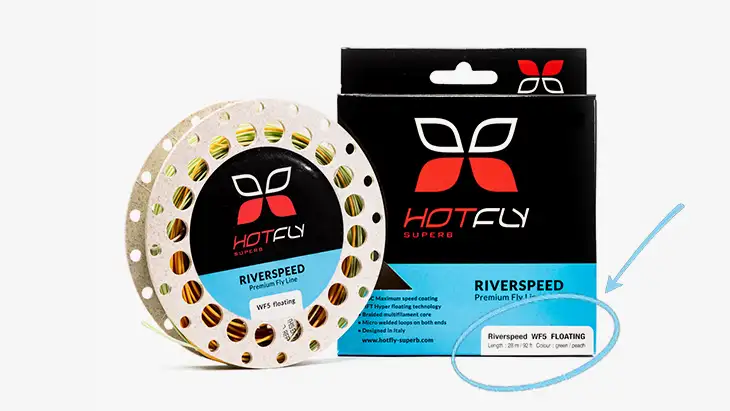
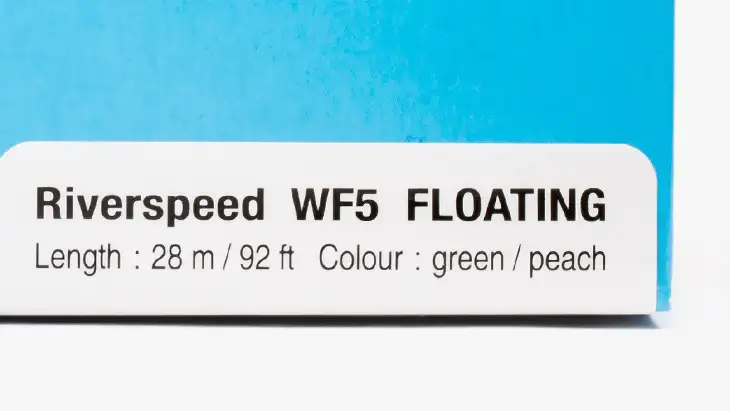
These are the numbers we are talking about – but what exactly do they tell us about this fly line?
The answer begins with a simple but essential principle: in fly fishing, the weight of the line determines how the rod performs. For the line and rod to work in harmony, the casting weight must be defined – not by the diameter or the visual appearance of the line, but by its actual mass. This is precisely where the AFTMA system comes into play. It is the key to understanding why a #5 line (in principle!) belongs on a #5 rod – and why this rule is a useful guideline, but not always the final word.
AFTMA Classes in Fly Fishing – Explained Briefly
What does AFTMA mean for fly lines?
AFTMA stands for American Fishing Tackle Manufacturers Association. The system classifies fly lines based on the weight of the first 9.14 m (30 ft) of the line in order to match fly lines and fly rods in a meaningful and standardized way.
Why is the weight of the fly line so important?
In fly fishing, the fly is not cast by its own weight. Instead, the mass of the fly line loads the rod and transfers the energy of the cast, carrying the feather-light fly to its target.
What does the number on a fly line mean (#3, #5, #8)?
The number indicates the AFTMA class of the line. The higher the number, the heavier the fly line. Light classes (#1–#3) are designed for delicate presentations, mid-range classes (#4–#6) are typical all-round choices for trout and grayling fishing, while heavier classes (#7+) are commonly used when targeting pike, salmon or in saltwater fly fishing.
Do the fly rod and fly line always need to have the same class?
In principle, yes. A #5 fly rod is designed for a #5 fly line so that the rod loads properly during the cast. In practice, however, some anglers deliberately choose lines that are optimized for specific techniques in order to load the rod more quickly or make shorter casts easier.
Why do fly lines of the same class cast differently?
The AFTMA standard only considers the weight of the first 9.14 m of the line. Modern fly lines, however, differ significantly in their taper design and therefore in the distribution of weight along the line. As a result, two lines with the same class can behave very differently when casting.
What is more important: AFTMA class or line profile?
Both are important. The AFTMA class defines the fundamental casting weight of the line, while the line profile (e.g. WF, DT or specialized tapers) determines how the line behaves in practice when casting, presenting the fly and maintaining control.
1. Why a Standardized Line Weight System Became Essential
Imagine you want to buy a new fly rod, perhaps a #4 for dry fly fishing on a small stream. Without a standardized system, you would have no idea which line matches that rod. One line might be too heavy, another too light. In the first case the rod would be overloaded, in the second it would fail to load properly. The cast would feel strange, and you might spend a long time wondering what is actually going wrong.
This problem did in fact exist in the past: fly lines were labeled in different ways, their weights were not easily comparable, and manufacturers used their own systems. But because casting in fly fishing depends not only on good technique but also on the precise interaction of your equipment, a clear and universal reference became necessary. The AFTMA system therefore introduced an objective measurement that defines how heavy a fly line should be – allowing rod builders, line manufacturers and anglers to speak the same language.

Relaxed, elegant and precise casting – when rod and fly line work in harmony, everything falls into place naturally
2. A Look Back: The Development of Fly Lines
2.1. When Silk Lines Defined the Standard
In the early days of fly fishing, fly lines were made from braided silk. These silk fly lines had a decisive advantage: their diameter was closely related to their weight. If you saw a thicker line, you immediately knew it was heavier. Classification was therefore simple. Letter combinations such as “HDH” or “HCH” described the diameter – and indirectly the casting weight. For the standards of the time, this worked perfectly well.

Silk lines are still used today, particularly in combination with traditional split-cane fly rods
2.2. The Revolution of Synthetic Fly Lines
Everything changed with the introduction of synthetic coatings. Plastic suddenly made possible a level of variation that had previously been unimaginable:
-
light or heavy coatings,
-
different cores,
-
improved floating properties,
-
sinking sections,
-
new taper designs,
-
more refined tapers.
Suddenly a thin line could be heavier than a thick one. Diameter lost its meaning, and comparing two fly lines became far less straightforward. In this situation, an objective and standardized system became urgently necessary.

Modern fly lines consist of a core and a plastic coating
3. The Introduction of AFTMA Line Classes
The American Fishing Tackle Manufacturers Association (AFTMA) therefore introduced a standardized classification system in the early 1960s based on a single measurement:
The measured weight of the first 30 feet (9.14 meters) of fly line (with the very first, uniform section of the line – the level tip, usually around 30 cm long – excluded from the measurement). For the first time, this created a system that allowed fly lines from different manufacturers to be compared directly. AFTMA itself no longer exists today and has been replaced by the AFFTA (American Fly Fishing Trade Association), but the fundamental principle has remained unchanged. The line weight classification was adopted and still forms the basis of modern fly fishing today.
4. WF, DT, L and LL – The Basic Fly Line Profiles
Every fly line falls into one of three basic categories. These profiles have a major influence on how a rod loads at different casting distances – and they are essential for interpreting AFTMA line classes correctly.
4.1. WF – Weight Forward
A WF (Weight Forward) fly line features a weighted head in the front section, followed by a thin running line. This design ensures that the rod receives sufficient weight even at short casting distances.
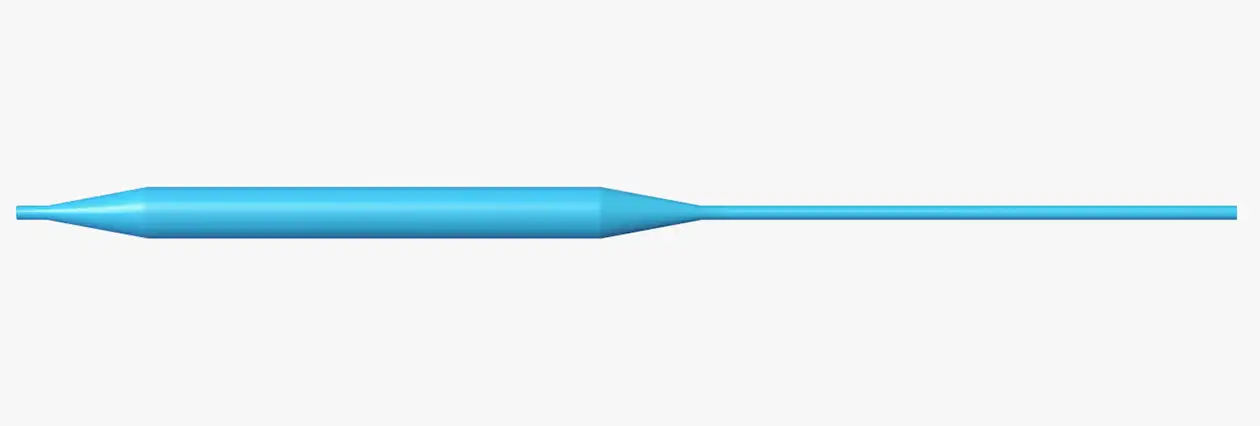
Typical profile of a WF fly line – most of the weight is concentrated in the head at the front
Typical characteristics:
-
The rod loads quickly.
-
It is easy to cast, especially for beginners.
-
Casts cut through wind effectively.
-
Longer distances are easier to achieve.
However, not all WF lines are the same. Some heads are long and elegant, others short and extremely compact – and these differences have a huge impact on how the line feels during the cast.

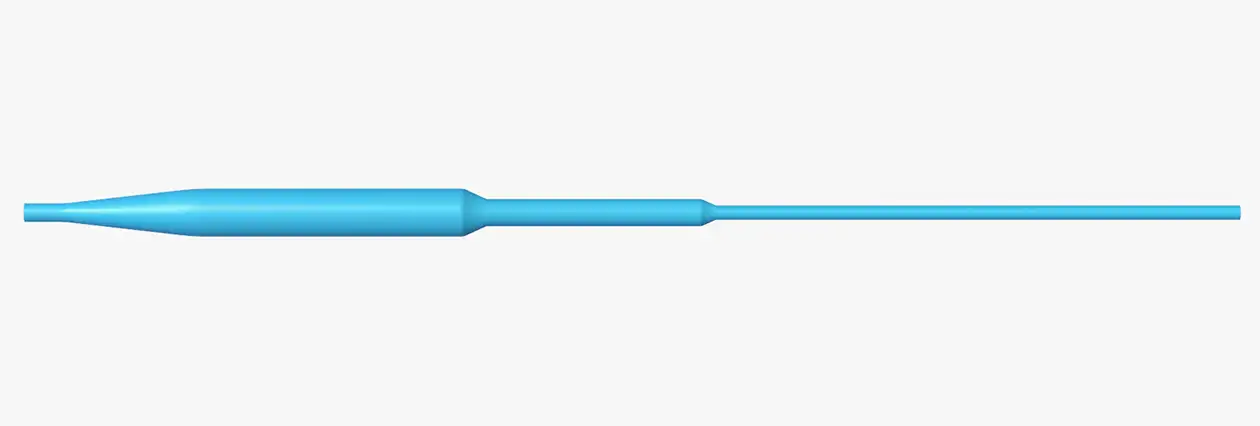
The shape of the head – the taper – can vary from model to model and gives each WF line its specific casting characteristics
4.2. DT – Double Taper
The double-tapered profile of a DT (Double Taper) fly line represents the classic construction of traditional fly lines. Thanks to the symmetrical taper at both ends, it allows particularly controlled and precise casts at short to medium distances. Between the two thinner tips lies a long, evenly thick middle section.
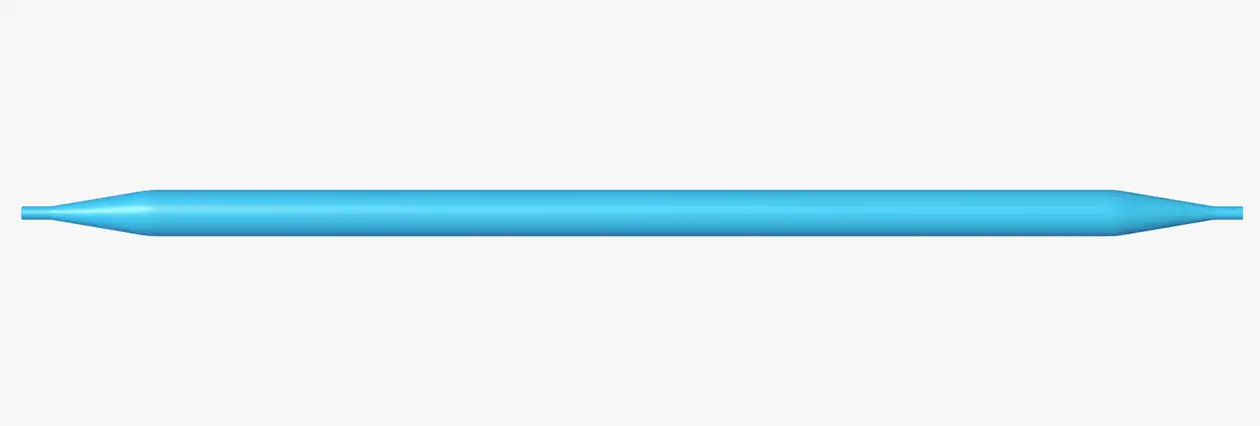
The symmetrical taper and balanced line profile are characteristic features of DT lines
Its strengths:
-
delicate presentations,
-
smooth energy transfer,
-
excellent roll-casting performance,
-
ideal control for traditional fly fishing at short to medium distances.
Because the mass of a DT line is distributed evenly, the effective weight increases gradually the more line you carry outside the rod tip. In addition, the symmetrical design offers another practical advantage: once one end of the line becomes worn, you can simply reverse it. As a result, a DT line that can be used from both ends usually lasts significantly longer.
4.3. L or LL – Level (Line)
Level lines have the same diameter along their entire length – no taper, no head.
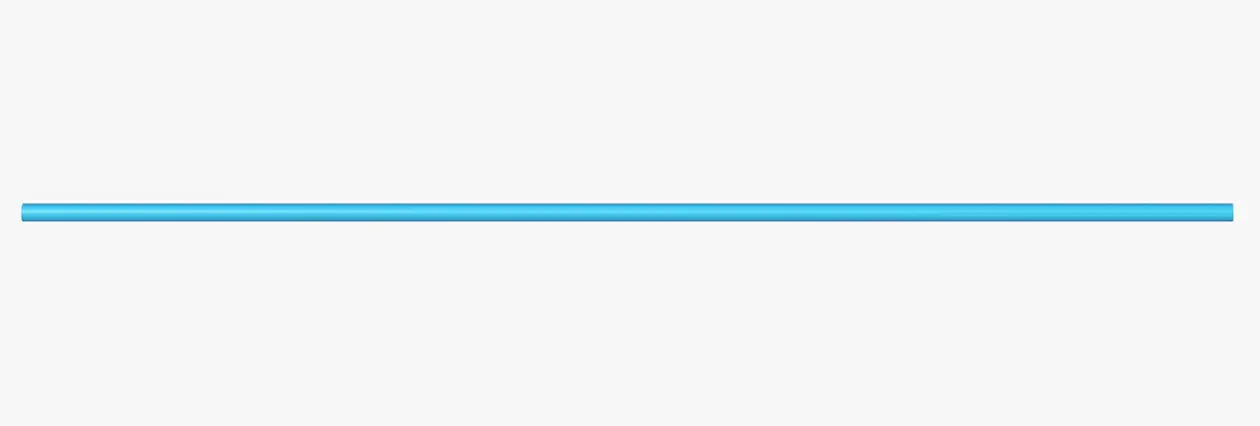
The use of level lines in fly fishing is limited to a few specific applications
Their main importance today lies in modern nymphing techniques:
-
minimal line weight,
-
very little casting mass,
-
maximum control over the nymph,
-
extremely direct contact.
For traditional overhead casting, however, level lines play almost no role.
5. F, H, I, S – The Abbreviations for a Fly Line’s Floating and Sinking Behavior
Besides the profile of a fly line, its floating or sinking characteristics also play a key role. On every line box you will find abbreviations that indicate how the line behaves in the water. These codes are simple in structure, yet they reveal a great deal about the intended use of the line.

On the water, it’s not just the right line weight and the right profile that matter, but also other properties of the fly line – such as whether it floats or sinks
F (Floating) refers to fully floating lines. A floating line stays on the surface along its entire length and is ideal for dry flies, nymphs fished just below the surface, classic stream and river fishing, and situations where control and visibility are crucial.
H (Hover) describes lines that hover just below the surface. They sink extremely slowly and feel almost weightless in the water. Hover lines are particularly useful when the surface film, wind or current makes a slight sub-surface presentation advantageous – without immediately dropping into deeper layers.
I (Intermediate) stands for lines that sink more slowly than true sinking lines, yet still work below the surface. They are an excellent choice for lakes and reservoirs, shallow coastal areas, or whenever the fly should be fished just under the surface film. Sink rates vary by manufacturer, but typically fall into the range of only a few centimeters per second.
S (Sinking) refers to faster-sinking lines designed to reach deeper water. They are commonly used in stillwaters, for streamer fishing, or in strong currents. Sinking lines are available in different sink-rate classes, often stated in IPS (inches per second) – i.e. how many inches the line sinks per second.
Typical designations are:
-
S1 – very slow sinking (approx. 1 inch/s, i.e. about 2.5 cm/s)
-
S3 – medium sink rate (approx. 3 inch/s, i.e. about 7.5 cm/s)
-
S5 – fast sinking (approx. 5 inch/s, i.e. about 12.5 cm/s)
-
S7 – very fast sinking (approx. 7 inch/s, i.e. about 18 cm/s)
In addition, there are combination lines that combine multiple characteristics in a single line. Codes such as F/I or F/S indicate that the line has a floating running line, while the head hovers or sinks slowly. These profiles allow very precise depth control and are extremely popular in stillwaters and for streamer fishing. These additional designations add an important dimension to the AFTMA system: they tell the fly angler not only how much a line weighs, but also where in the water column it is designed to fish.
6. How AFTMA Line Weights Are Measured – and Why 30 Feet Is the Key
The AFTMA system does not consider the entire line, but only the first 30 feet. When line classes were introduced, fly fishing generally took place at around 15 meters. In other words: 30 feet of fly line outside the rod tip plus 9 feet of rod length plus a 12-foot leader adds up to about 5 feet – or roughly 15 meters. This section is weighed and compared with defined weight ranges. An AFTMA line class 5 has a different weight window than an AFTMA class 4 or class 6. The increments are fine enough to be noticeable in casting, yet broad enough to accommodate different line tapers and designs.
In this table you will find all line weights in grains and grams, as well as the tolerance ranges for single-hand line classes from #1 to #15:
| Weight in grains | Weight in grams | |||||
| Line weight | Min. | Exact | Max. | Min. | Exact | Max. |
| 1 | 54 | 60 | 66 | 3.50 | 3.90 | 4.30 |
| 2 | 74 | 80 | 86 | 4.80 | 5.20 | 5.60 |
| 3 | 94 | 100 | 106 | 6.10 | 6.50 | 6.90 |
| 4 | 114 | 120 | 126 | 7.40 | 7.80 | 8.20 |
| 5 | 134 | 140 | 146 | 8.70 | 9.10 | 9.50 |
| 6 | 152 | 160 | 168 | 9.90 | 10.40 | 10.90 |
| 7 | 177 | 185 | 193 | 11.50 | 12.00 | 12.50 |
| 8 | 202 | 210 | 218 | 13.10 | 13.60 | 14.10 |
| 9 | 230 | 240 | 250 | 14.90 | 15.55 | 16.20 |
| 10 | 270 | 280 | 290 | 17.50 | 18.15 | 18.80 |
| 11 | 318 | 330 | 342 | 20.60 | 21.40 | 22.20 |
| 12 | 368 | 380 | 392 | 23.80 | 24.60 | 25.40 |
| 13 | 435 | 450 | 465 | 28.20 | 29.20 | 30.20 |
| 14 | 485 | 500 | 515 | 31.10 | 32.40 | 33.70 |
| 15 | 535 | 550 | 565 | 34.30 | 35.60 | 36.90 |
6.1. The Role of Tolerances
Each AFTMA line class comes with an allowable weight range. Many modern lines are intentionally built at the upper end of that tolerance – or even slightly above it – to load today’s fast-action rods more effectively. This is why a WF5 can feel more like a WF6 in real-world casting, without technically being “wrong”.
6.2. Why Diameter No Longer Tells You Anything
Modern lines clearly show that diameter and weight are no longer directly related. Different coatings, cores and densities can make two lines of the same thickness completely different in weight. The weight of the first 30 feet – not the diameter – is what matters.
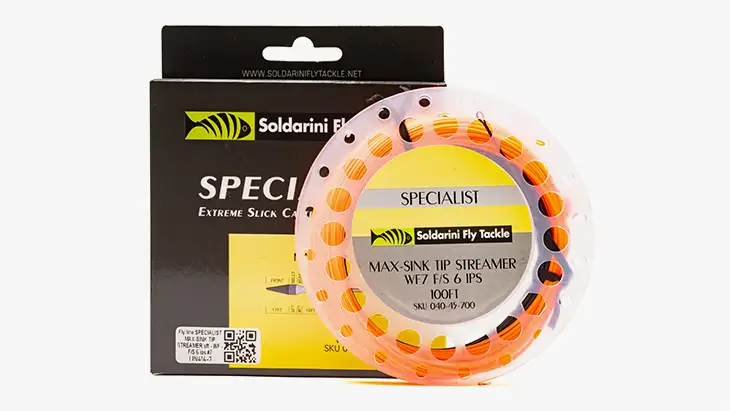
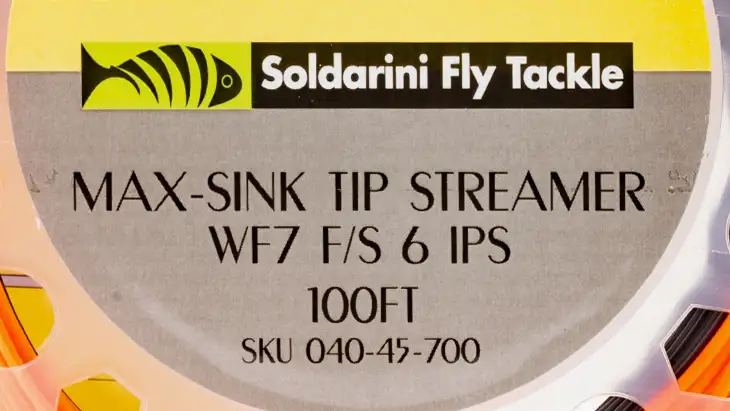
By now, all of these markings on a fly line should look familiar
7. Why the AFTMA Class Is Only a Starting Point – Not the Whole Truth
The AFTMA class describes a standardized scenario that rarely occurs in real life: casting with exactly 30 feet of line in the air. On the water, however, distance, technique and conditions change constantly. And that changes the actual load on the rod – often far more than you might expect.
If you only carry a few meters of line out in front of you, say five or six meters, there is very little mass in the air. The rod loads only lightly, works below its optimal range and feels stiffer or “reluctant”. Many anglers misinterpret this as a characteristic of the rod, when in reality it simply lacks the weight needed to activate it properly.
If, on the other hand, you cast longer and carry 12 to 14 meters of line outside the rod tip, the picture changes. Now there is significantly more mass in the air, the rod bends deeper, the cast becomes more powerful – and also more demanding. The rod is under greater load, and your timing has to be more precise because the mass behind you creates more leverage.
On top of that, the line profile plays a major role:
-
A DT loads the rod more and more as you carry additional length, because its mass increases evenly.
-
A WF loads mainly through its head; once you are beyond the head, the load changes very little because the running line is very light.
-
A long head behaves powerfully at distance and creates additional load over many meters.
-
A short head delivers its main weight early, making the rod feel powerful and responsive even at short range.
These factors make one thing clear:
The AFTMA number is a useful reference – but it does not describe what casting actually feels like on the water.
Real-world behavior depends far more on the amount of line you are carrying, the line profile and the rod action than on the number printed in the class code.
8. Modern Fly Rods – Why They Push the AFTMA System to Its Limits
Fly fishing has evolved enormously. Beyond classic fishing on small streams and rivers, there are now many highly specialized disciplines:
-
coastal fly fishing,
-
tropical flats fishing,
-
heavy streamer fishing,
-
big-game fly fishing for sailfish, tuna and more,
-
two-handed techniques,
-
Euro nymphing,
-
and much more.
Each of these areas places its own demands on tackle. Rod builders and designers have responded by developing models that range from ultra-sensitive tip actions all the way to extremely fast, powerful blanks.
Many modern fly rods:
-
have high recovery,
-
feature stiffer tips,
-
require more casting weight,
-
are designed for power-oriented casting styles.
To make these rods work cleanly at short range – with only a small amount of line outside the rod tip – many lines are now built heavier. Manufacturers use compact, dense heads or deliberately shift more weight toward the front.
This creates a kind of feedback loop: fast rods call for heavier lines. Heavier lines encourage rod designers to build even stiffer blanks. The result is modern tackle that remains compatible with AFTMA classes, but no longer matches the original idea behind them with complete precision.
The consequence:
AFTMA is still important – but today, the actual casting feel is shaped by far more factors than the raw weight window alone.
9. A Rod Can Fish More Than Just One Line Class
Fly rods are flexible. They do not have a single point of maximum efficiency, but a working range. That is why many rods can handle two – sometimes even three – adjacent line classes very well.
A typical #5 rod, for example, can:
-
match beautifully with a DT5, working smoothly and with control – ideal for precise presentations,
-
load earlier and feel more powerful with a modern WF5,
-
handle heavy nymphs or wind confidently with a WF6,
-
present subtly and quietly with a DT4.
The right choice depends on the intended use – not solely on the number printed on the blank. That is exactly why the saying holds true:
Rods have a working range – not a rigid class boundary.
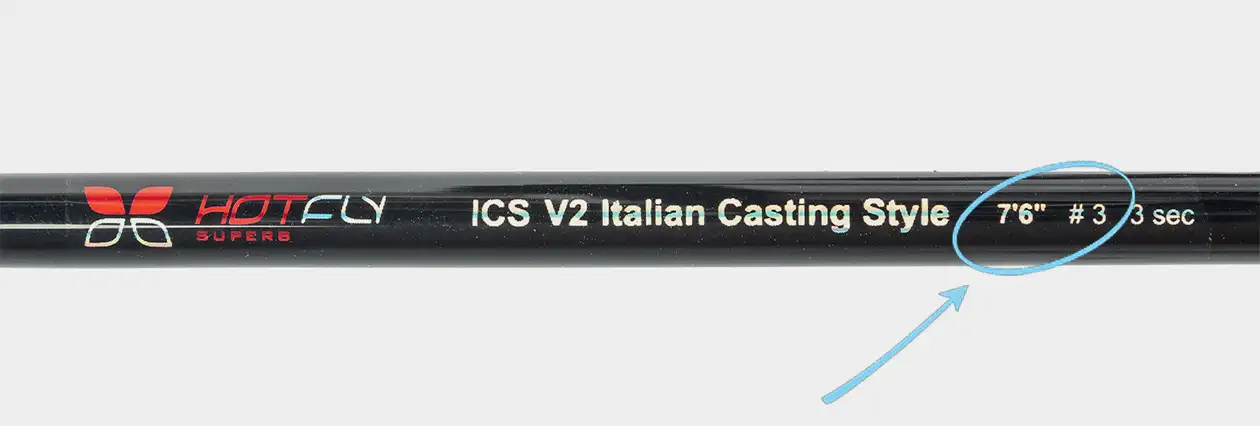
ICS (Italian Casting Style) fly rods are an excellent example of an exception to the rule: nominally, a #3 line is recommended to achieve the optimal balance of rod and line for this specific high-line-speed casting style. In classic overhead fly casting, however, the rod would typically handle something closer to a #5 line.
10. WF Heads, Compact Tapers, and the Truth About Learning to Cast
Compact WF heads are extremely popular today – and for good reason. They load the rod quickly, make casting more intuitive and give beginners an immediate sense of success. After just a few meters, plenty of weight is already in the air, so the rod bends noticeably and the cast develops powerful momentum.
But that comfort influences the learning process. A compact head forgives timing errors and can still be cast even when the casting stroke is not ideal. That feels great, but it can sometimes prevent anglers from truly learning the finer, classic elements of good casting:
-
clean loop formation,
-
proper delay on the back cast,
-
smooth, even acceleration,
-
precise stops.
When anglers later switch to a DT or to a WF line with a longer head, they often notice quickly how much these lines demand solid technique. Compact heads are an excellent tool – but they are not neutral. They help at the beginning – but they also shape your casting.
11. Euro Nymphing – A Deliberate Special Case Outside the AFTMA Logic
Euro nymphing does not operate within the classic casting system. The goal here is not to cast the nymphs using the weight of a fly line, but to ensure that the line interferes as little as possible with maintaining direct contact to the nymphs. Because these lines are extremely light, they do not sag and they are not sluggish in the drift. This allows your nymphs to move very naturally with the current and drift almost completely unaffected – yet you can still maintain slight tension and feel even the smallest take, whether it is a delicate bite or the nymph touching the bottom.
For this reason, this specialized technique also has different requirements for the tackle, and especially for the lines used:
-
The line should be as light as possible.
-
Casting is not done with a classic overhead cast, but rather with a single forward-and-back flick or sling.
-
The line is not laid on the water but kept as much as possible above the surface (under light tension).
-
The focus is not on distance, but on achieving the most natural drift possible and maintaining absolute control through direct contact with the nymphs.
That is why Euro nymph anglers do not use traditional fly lines, but instead rely on:
-
ultra-thin and nearly weightless level lines, typically around 0.55 mm in diameter (as this is the minimum diameter specified by FIPS Mouche for fly lines in competitive fly fishing)
-
or pure monofilament rigs.
On an AFTMA scale, these lines would barely produce measurable results – and that is entirely intentional. Euro nymphing is a world of its own with its own set of requirements. If you are interested in learning more, you can find an extremely informative article here that covers the topic in great detail.
12. Two-Hand AFTMA – Numbers That Look Familiar, but Mean Something Completely Different
If you come from single-hand fly fishing, you will quickly notice something surprising: a fly line for a two-handed rod in AFTMA class 7 is much heavier and thicker than a single-hand #7. The reason is simple: the same class numbers are used, even though the underlying weight ranges are completely different. On top of that, two-handed casting is not only about the weight of the line, but also about the casting style – and therefore about line design: compact Skagit heads paired with heavy sink tips, or longer Scandi heads that are often combined with different polyleaders.
-
Skagit heads are extremely heavy and very short – ideal for heavy sink tips and large streamers.
-
Scandi heads are longer, more elegant, and designed for more delicate presentations.
-
Classic Spey lines are long and distribute mass over large lengths of line.
An example: a two-handed rod in AFTMA class 8 is optimally matched with a Skagit head weighing between 550 and 600 grains (approx. 35.5–39 grams). With a Scandi shooting head, 450–550 grains (approx. 29–35.5 grams) are sufficient, and with a Spey line it is 580–630 grains (approx. 37.5–41 grams). By comparison, a single-hand line class 8 weighs “only” 210 grains (13.6 grams) – far less.
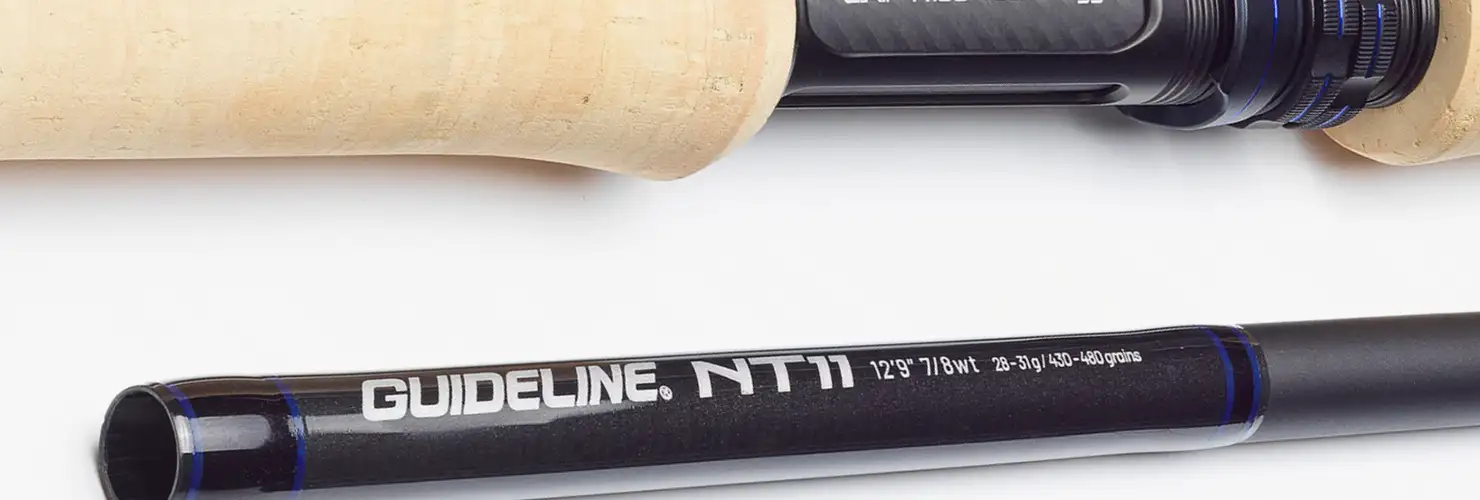
This two-handed rod in AFTMA class 7/8 has an ideal casting weight of 28–31 grams (430–480 grains)
The topic of line classes for two-handed rods is a science of its own and could easily fill at least a second blog article. In short: the two-handed world also uses a classification system that is built in a similar way and based on the weight of a defined length of line. Unfortunately, the same numbers are used for single-hand and two-hand classes – which can be confusing at first.
13. How to Find the Right Fly Line – A Practical Guide
Choosing the right fly line does not start with a number – it starts with your real conditions on the water. Ask yourself the following questions:
-
What distance do I fish most of the time?
Short range → compact WF or DT
Medium range → WF or a longer head
Long range → long WF heads -
What flies do I use most often?
Heavy streamers → one line class heavier
Delicate dry flies → true standard weights -
How fast is my rod?
Fast = more line weight
Moderate = true-to-class weight -
Do I prefer powerful or gentle casts?
Powerful = WF6 instead of WF5
Gentle = DT4 instead of WF5 -
How often do I deal with wind?
Wind = concentrated WF heads -
Do I mainly use overhead casts or roll casts?
Roll casting → DT or longer heads
Overhead casting → almost anything works
This table gives you a first overview of which line class – and therefore which rod class – makes sense for different target species:
| Line / rod class | Typical application | Target species |
| #0 - #4 | Smaller waters, < 15 m wide | Trout, grayling |
| #4 - #6 | Medium-sized waters, 10–25 m wide | Trout, grayling |
| #5 - #6 | Lakes, larger rivers | Trout, grayling |
| #6 - #7 | Stillwater from a boat, larger rivers | Trout, perch |
| #6 - #8 | Rivers, coast, stillwater from the bank | Asp, sea trout, sea bass, carp |
| #7 - #10 | Larger rivers, stillwater, coast | Pike, huchen, salmon |
| #9 - #10 | Coast, saltwater boat fishing | Permit, small tarpon |
| #10 - #15 | Saltwater boat fishing | Tarpon, GT, tuna |
14. Conclusion – AFTMA Is the Foundation, Experience Is the Path
The AFTMA system brought order and comparability to fly fishing and still forms the foundation for matching rods and lines. But modern rods, innovative line tapers and specialized techniques have expanded how we understand it. Anyone who truly understands AFTMA line classes will recognize why a line works the way it does – and how to choose a setup with purpose. In the end, that knowledge is what makes the difference: not buying blindly by the number, but choosing consciously what suits your own style of fishing.
AFTMA provides the base. The feel on the water writes the rest of the story.
15. Frequently Asked Questions About AFTMA Classes and Fly Lines
CONTENTS:
- Why a standardized line weight system became essential
- A look back: the development of fly lines
- The introduction of AFTMA line classes
- WF, DT, L and LL – the basic fly line profiles
- F, H, I, S – floating and sinking behavior of fly lines
- How AFTMA line classes are measured
- Why the AFTMA class is only a starting point
- Modern fly rods – why they challenge the system
- A rod can fish more than just one line class
- WF heads & compact tapers – what they mean for learning to cast
- Euro nymphing – a special case outside the AFTMA logic
- Two-hand AFTMA – same numbers, different weights
- How to find the right fly line – a guide
- Conclusion – AFTMA is the foundation
- FAQ
The AFTMA class describes the weight of a fly line within a standardized range. It helps you match fly rod and fly line in a meaningful way.
AFTMA stands for American Fishing Tackle Manufacturers Association. The original system was developed to classify fly lines according to the weight of the first 30 feet, or 9.14 meters, of line.
Yes, AFTMA no longer exists in its original form and was replaced by AFFTA, the American Fly Fishing Trade Association. In practice, however, the term AFTMA is still widely used because many fly anglers continue to refer to this familiar designation.
The number on a fly rod indicates the line weight the rod is generally designed for. A #5 rod is therefore usually intended to be fished with a #5 fly line.
The number indicates the line weight and therefore the standardized weight of the fly line. The higher the number, the heavier the line and, in most cases, the more powerful the matching rod.
The weight of the first 30 feet, or 9.14 meters, of fly line is measured. In the classic measurement system, the short level tip at the front of the line is not included.
Grain is a very precise unit of weight that makes small differences in fly line weight easy to express. With fly lines, these fine differences matter because even a few grains can noticeably change the casting feel.
A single-hand #6 fly line has a standard weight of 160 grains, or about 10.4 grams, over the first 30 feet. The allowed tolerance range is between 152 and 168 grains.
In principle, a rod is designed for the matching line class. In practice, however, it can make sense to choose a slightly lighter or heavier line depending on the rod, technique, casting distance and fly size.
Start with the line weight printed on your rod and then consider how you will actually fish. For long casts, wind or heavy flies, a more powerful WF line can be useful, while delicate presentations often benefit from true-to-class line weights or DT lines.
Yes, many #5 rods can handle a #6 line well, especially at short range or when fishing heavy nymphs and streamers. The rod will load more quickly, but at longer distances it may feel heavier and less precise.
A lighter line can make sense when you want a very delicate presentation or when you already carry enough line weight in the air at longer distances. Especially in calm dry-fly fishing, a slightly lighter setup can feel smooth and precise.
The AFTMA class only describes the weight of the first 30 feet, not how that weight is distributed. Head length, taper, running line, front taper and material density can all strongly affect casting behavior.
Both are important, but in practice the line profile often has a stronger influence on the actual casting feel. The AFTMA class provides the basic reference point, while WF, DT and specialized tapers determine how the line behaves on the water.
WF stands for Weight Forward and describes a fly line with a heavier head in the front section. This helps the rod load quickly, which is especially useful at short to medium distances and in windy conditions.
DT stands for Double Taper and describes a fly line that is tapered at both ends with an even middle section. It is particularly well suited to delicate presentations, controlled casts and classic fishing at short to medium distances.
A Level Line has the same diameter along its entire length and no head. It plays only a minor role in classic overhead casting, but is important in modern Euro nymphing because of its low weight and direct contact.
For most trout fishing situations, classes #4 to #6 are the most versatile. Small streams can often be fished beautifully with #2 to #4, while larger rivers, lakes or windy conditions usually call for #5 or #6.
For beginners, a #5 rod with a matching WF5 floating line is usually the best choice. This setup is versatile, easy to cast and covers many typical trout and grayling fishing situations.
On small streams, line weights between #2 and #4 are usually ideal. They allow delicate presentations, short controlled casts and work well with small dry flies and light nymphs.
For streamer fishing, classes from #6 upward are usually useful, depending on fly size and target species. For large pike streamers, huchen or heavy sinking lines, classes #8 to #10 are often used.
F stands for Floating, I for Intermediate and S for Sinking. These abbreviations do not describe the line weight, but the floating or sinking behavior of the fly line.
WF6F means Weight Forward, line weight #6, Floating. In other words, it is a weight-forward floating fly line in class 6.
Modern fly lines use different cores, coatings and densities. A thinner line can therefore be heavier than a thicker one, which is why the actual weight matters more than the visible diameter.
Rod and line should initially be chosen in the same class, while the reel mainly needs to match the line size and balance the rod. A reel marked #4/5 or #5/6 usually means it has enough capacity for the matching fly line and backing, not that the reel itself casts an AFTMA class.
Numbers such as #4/5 or #5/6 on a fly reel indicate the line classes the reel is designed to hold. They say nothing about casting weight, but help you combine line, backing and reel size correctly.
Many modern lines sit at the upper end of the AFTMA tolerance range or even slightly above it in order to load fast-action rods more effectively. This makes them easier to cast at short range, but they can feel more powerful than classic true-to-weight lines.
Yes, a fly line that is too heavy can overload a rod, especially when a lot of line is carried in the air. This can make the cast feel soft or imprecise, complicate timing and reduce accuracy.
A fly line that is too light does not load the rod properly. The cast can then feel hard, uncontrolled or weak, even though the real problem is not the rod but a lack of line weight.
Two-handed rods use similar class numbers, but the actual weights behind those numbers are completely different from single-hand rods. For example, a two-hand #8 is therefore not directly comparable to a single-hand #8.
In Euro nymphing, the line should have as little weight as possible so it does not interfere with the natural drift of the nymphs. That is why ultra-thin level lines or monofilament rigs are used, which do not follow the classic AFTMA logic.
The right class depends on the target species, water size, fly size, wind and casting distance. For trout and grayling, #4 to #6 are typical all-round classes, while pike, salmon, huchen and saltwater species require significantly more powerful line weights.

This might also interest you:

LEARNING TO FLY FISH - easier than you think!
Fly fishing is more than just a hobby, it is a fascinating passion. If you want to learn how to fly fish, take a look at our guide and learn everything you need to know about fly fishing for beginners.
LEARNING TO FLY FISH - easier than you think!
Fly fishing is more than just a hobby, it is a fascinating passion. If you want to learn how to fly fish, take a look at our guide and learn everything you need to know about fly fishing for beginners.

EURO NYMPH - a complete tutorial to get started
With this compact tutorial to Euro Nymph style fly fishing, we wanted to give some basic advice to anyone approaching this very effective and successful fishing technique. Even if you already have some experience, you probably will find some useful information, tips and tricks you did not know yet.

Fly Line to Backing Connections
How much backing do you actually need on a fly reel and which knot is best for creating a secure connection between backing and fly line? In this article, we’ll show you the most important connection methods, explain the advantages of Nail Knots and Loop-to-Loop connections, and cover everything you should know about backing capacity, breaking strength and properly spooling your reel.

Classic Nymph Fishing: Development, Technique and Tactics
Nymph fishing is considered one of the most effective – and at the same time one of the most demanding – methods in fly fishing. But what truly lies behind this technique? In this article, you learned how nymph fishing evolved, which concepts remain relevant to this day and why many anglers regard it as the supreme discipline of fly fishing.

Perfection Loop: Instructions, Advantages and Uses in Fly Fishing
The Perfection Loop is one of the most important knots in fly fishing – strong, compact and highly versatile. In this article, we’ll show you step by step how to tie this loop knot cleanly and easily. You’ll also learn when it’s especially useful and how to apply it effectively on the water.

Tenkara fishing – simply explained
Tenkara fishing is a minimalist yet remarkably effective technique rooted in Japanese tradition. In this guide, you’ll learn how it works, what gear you need, and why more and more anglers are drawn to this refined approach. We’ll also walk you through the basics to get started and help you make the most of Tenkara on small streams.

What are the benefits of a day with a professional fly casting instructor?
Admittedly, I was a bit sceptical at first - after all, I've been fly fishing for 15 years! I also catch my fish without any problems. So what would a day with a certified casting instructor do for me?


